• Home
  • Shop
  • About
  • Exhibits
  • Contact me

jeanweaves

~ Jean Williams, Handweaver

jeanweaves

Author Archives: jeanweaves

Looking Ahead

19 Tuesday Aug 2014

Posted by jeanweaves in Weaving Inspiration

≈ Leave a comment

Tags

creative inspiration, CWSG, Fiber Arts, Spinning, Weaving

The Columbia Weavers and Spinners Guild is presenting its 25th Annual Holiday Exhibition and Sale this November. When we started in 1990, our goal was to build community, to education the public about fiber, and to learn better marketing skills.
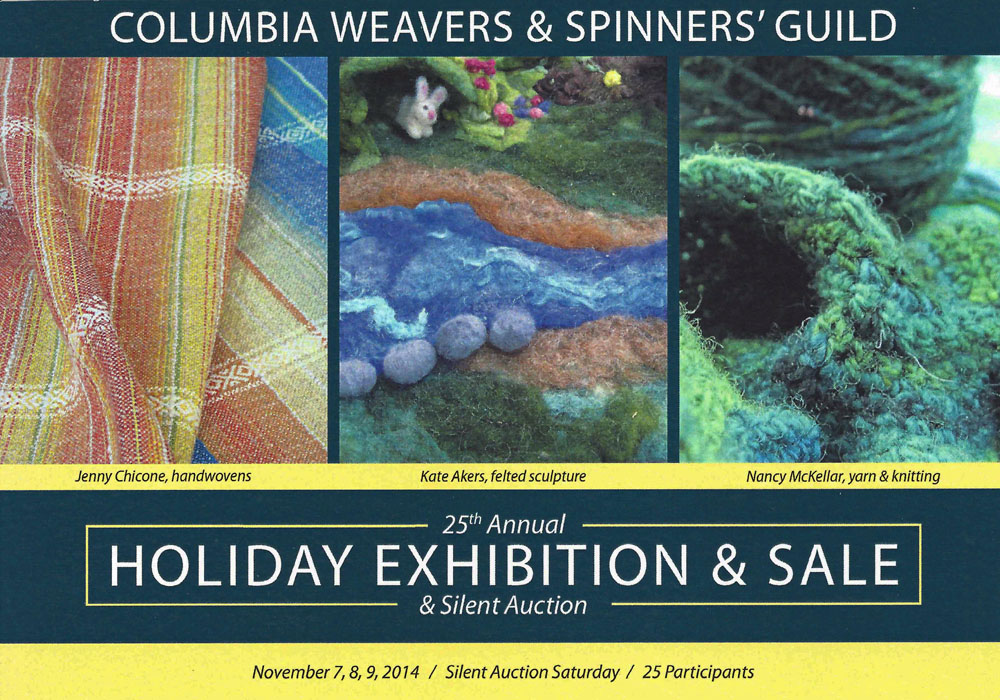
Columbia Weavers and Spinners Guild Holiday Exhibition and Sale 2014

Columbia Weavers and Spinners Guild Holiday Exhibition and Sale 2014

Many members have participated in the HES as the guild itself has grown, and we have definitely built lasting friendships as we have worked together on this event. It takes a lot of planning and many hands to publicize the exhibition, make an inviting display, and demonstrate throughout a weekend. We plumb all our other skills, from record keeping, writing, marketing, and teaching, to pull it all together. (Many participants have “day jobs” in addition to being fiber artists.)

Over the years, we’ve had Girl Scouts, 4-H club members, college students, football fans, people of all ages and interests, come see the demonstrations of weaving, spinning, twining, felting, and knitting. One loom is warped for anyone to try.  It’s fun to watch people tentatively throw a shuttle for the first time and figure out how the cloth is formed.

And we continue to learn ourselves. How do we present our handwovens? What color is featured in the mass market each year? What is the best way to finish the fiber so the customer can more clearly see what it is? What makes a good display?

One of my favorite parts of the Holiday Exhibition and Sale is seeing what everyone else is making. There is so much talent out there, so much creativity, that it fires the imagination! Just look at what can be done!

So if you happen to be in Columbia, Missouri November 7, 8 or 9, stop by the Boone County Historical Society Museum and be inspired!

Inspiration on the Trail

30 Wednesday Jul 2014

Posted by jeanweaves in Weaving Inspiration

≈ 2 Comments

Tags

creative inspiration, Weaving

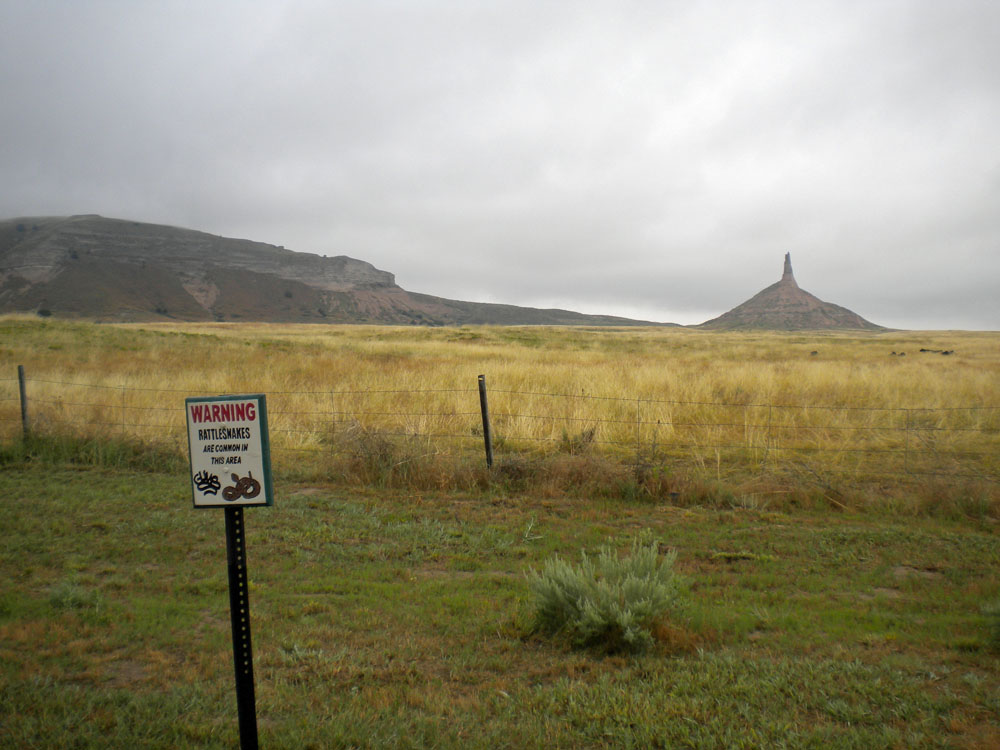
Chimney Rock in Nebraska

Chimney Rock in Nebraska

Like many, we’ve been on the road over the past couple weeks. It wasn’t a planned vacation per se–we were helping someone move across country and along the way, there was some wonderful scenery.

Our path followed the old Oregon Trail from Missouri through Nebraska and on into Wyoming. We reached Chimney Rock about the time we needed to stretch and spent a pleasant half hour in the Visitor Center. (Note the sign in the foreground–needless to say, we stuck to the sidewalks!)

Popo Agie River in Wyoming

Popo Agie River in Wyoming

The transition from plains to semi-arid scrub to mountain impressed us “flat-landers” as my husband called us. I thought often of how the American Indians and the settlers viewed the land they lived in and passed through. We had the luxury of an air-conditioned vehicle and could travel from state to state within two days. It took them many hot, long days by foot, horseback, or wagon.

We stood in awe at the foot of bluffs and mountain streams. I could have sat for hours soaking in the rock formations, the colors, the sounds. The Sinks State Park in Wyoming is worth the visit. The Popo Agie River “sinks” below the surface for 1/4 mile before “rising” back up and along its way to the Wind River. It was a lovely outing close to where we were staying and a hint of the grandeur further on down the road. We didn’t get to Yellowstone or the Grand Tetons on this trip but we’ll go back many times, I’m sure.

Sinks State Park in Wyoming

Sinks State Park in Wyoming

Now that I’m home, I’m pondering how to translate all of that beauty into fiber. I’m not a tapestry weaver but nature still influences what I weave. The play of color across the cliff face, the expanse of sagebrush, the shape of rock formations, all of these will echo in my mind as I plan new projects. Hopefully I can share something of the area’s beauty through weaving.

Unexpected Days Off

10 Thursday Jul 2014

Posted by jeanweaves in Uncategorized

≈ 2 Comments

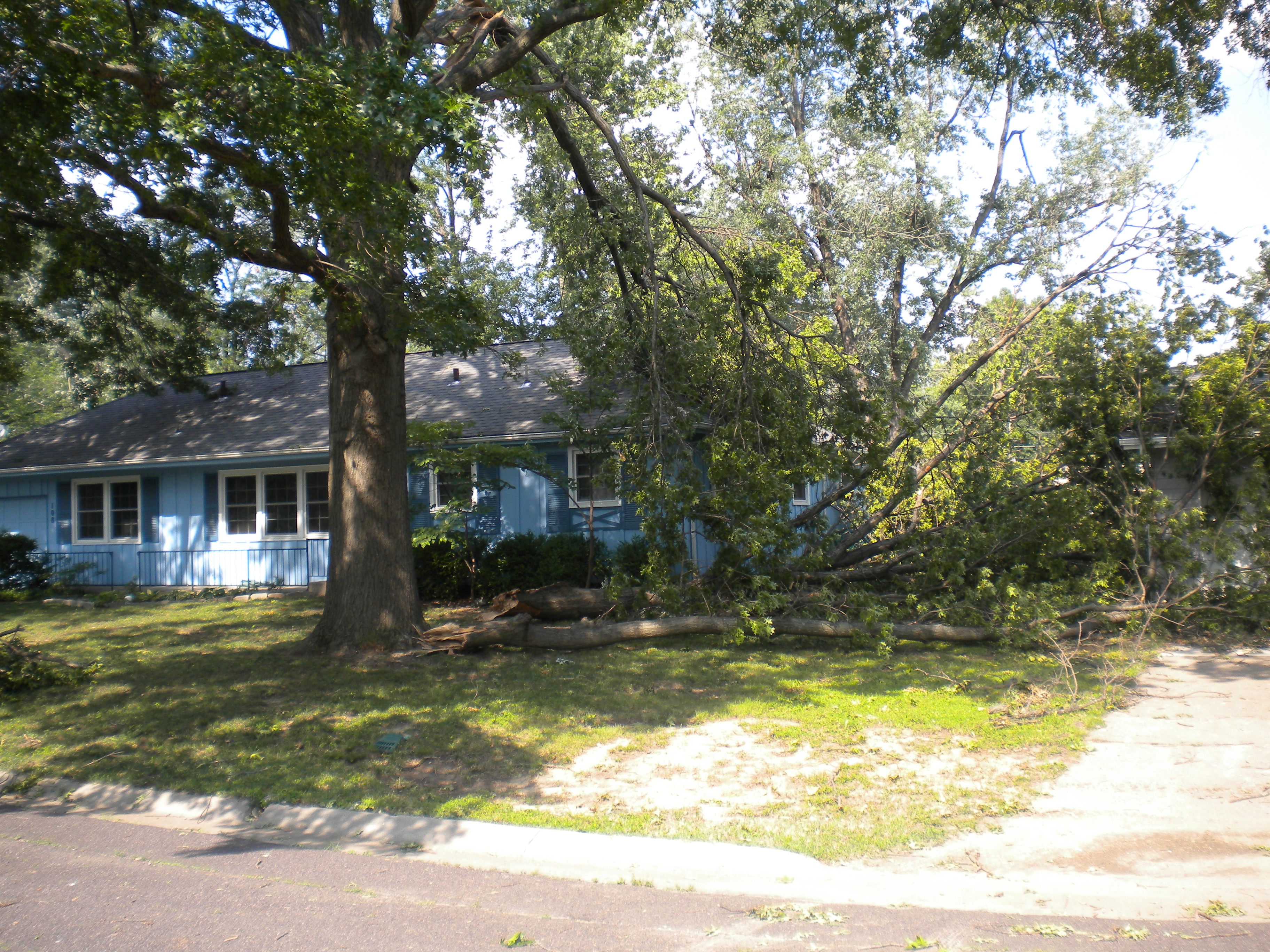
Results of Monday's winds

Results of Monday’s winds

This week had a stormy start here in the Midwest that left me with some unexpected days off from weaving. I did get another towel woven on the red warp on Monday and part of a double weave bookmark. At the end of the day, I loosened the tension on both looms and went upstairs as normal.

However, Monday night we had straight-line winds that knocked out the power and a good portion of a couple of our trees. So this week I’ve been outside picking up sticks, waiting for call-backs from tree companies and insurance, and basically waiting around until the power came back on and I could see enough to work downstairs. We are grateful no one was hurt here and our thoughts go out to others not so lucky in other parts of the Midwest and points east.

The power came back on late yesterday, so now it is back to work.

Loom Envy

02 Wednesday Jul 2014

Posted by jeanweaves in Craft History, Looms, Terminology

≈ Leave a comment

Tags

Craft History, Early American Weaving, Loom, Weaving

Many years ago, I heard a well-known weaver speaking at a conference. He joked that whenever he wanted to change threadings, he just went out and bought another loom. At least I thought he was joking and all us in the audience laughed with him. But now I wonder if, indeed, he was just being honest.

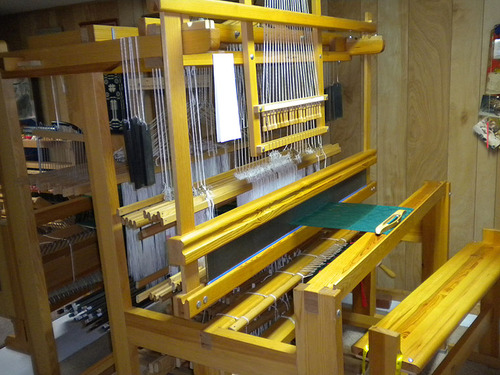
You see one of the most time-consuming tasks of weaving is threading the loom. Each thread has to go through a heddle and a dent (a slot) in the reed (the beater). Patterns weaves like damask and double go through two heddles and the reed. Some warps have hundreds of threads. So for that conference speaker, it was more cost-effective to buy another loom than to keep rethreading every time he needed to change patterns. I don’t think I can make the same argument.

One alternative is to put on very long warps. For me, “very long” is defined as 20 yards. One of my friends routinely puts on 21 yards. Some weavers put on 50 or more yards. The longer the warp, the more fabric you can weave before you have to re-thread.  But what if I get bored with the pattern after 10 yards and there are 20 more to go? What if I get an order for something that needs that width, but there are 20 more yards to weave before I can change warps?

Loom threaded with damask, using drawloom shafts.

Loom threaded with damask, using drawloom shafts.

Earlier weavers had a solution for this. Their looms had pieces that could be interchanged. There are references in their records to “gears” which controlled the pattern. When they needed to weave an overshot coverlet, they put that “gear” into the loom frame and tied on a new warp. If they needed to weave dimity, they stalled that “gear.” So it sounds like they had a limited number of loom frames and multiple “gears” to weave the various patterns they offered.

I’ve tried to imagine what these gears were. I have an antique Newcomb loom which has a cast-iron device that changes the shed and advances the warp every time the beater is pulled. Is this what they are talking about? If so, it would be pretty heavy to change out when a new order came in. Or are they referring to the actual shafts with heddles? I can see bundling my threaded shafts and carefully rolling them up to preserve a threading, but it would work better if I kept the threads in the reed and bundled the reed with the shafts. That requires extra reeds.

All this discussion is really an attempt on my part to fend off “loom envy.” For the past year, I’ve vacillated about getting another loom. I’ve pretty much decided that it’s not necessary, but there are times when I really could use another wide loom. A girl can dream!

In Homage to Our Grandmothers

17 Tuesday Jun 2014

Posted by jeanweaves in Craft History, Weaving Inspiration

≈ Leave a comment

Tags

creative inspiration, family, grandmothers, handwork

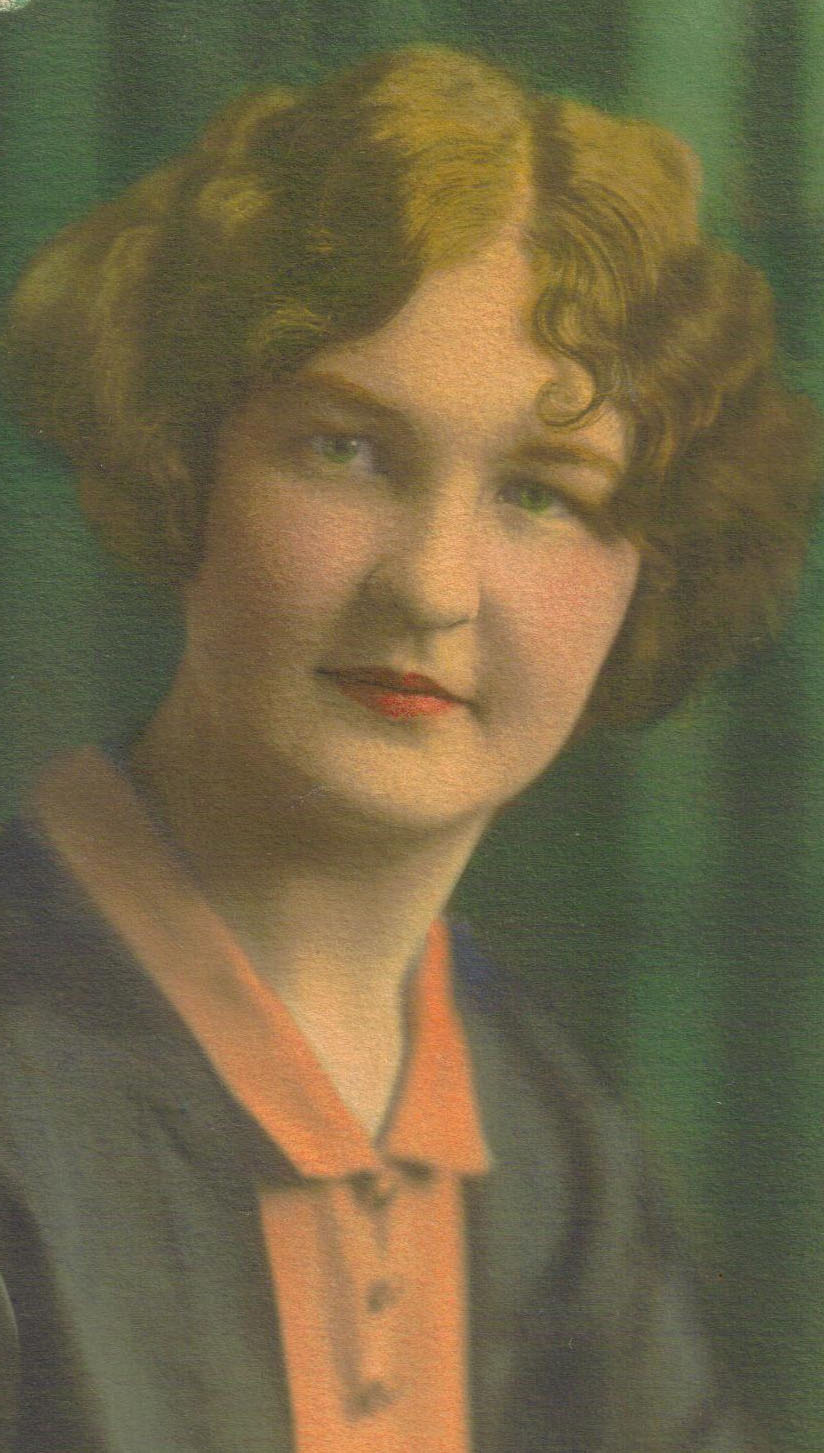
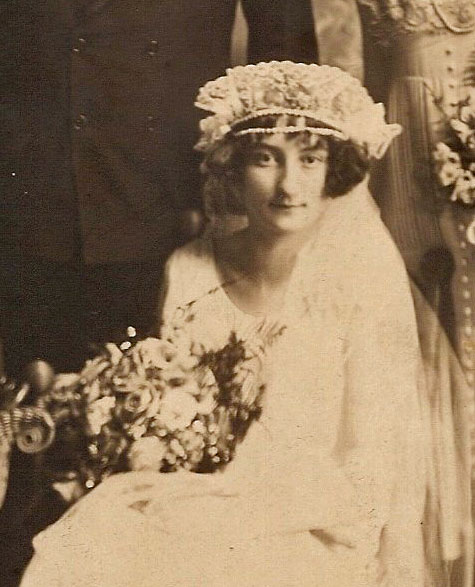
My Grandmothers leave me in awe. Both of them raised families during the Depression. Both were farm wives—women whose days started early and ended late. Both helped work the farm. Both grew expansive gardens, preserving the produce at harvest. Both cooked from scratch to feed hungry families. And yet both found time and energy to make beautiful things!

Grandma K

Grandma K

Grandma D

Grandma D

These women were experts in the art of making do with what was on hand to create lovely accents for their homes and their families. My mother tells a story of her Grandmother seeing a doily in a store window, studying it, then going home and making one just like it for herself. Growing up, I just assumed that everyone’s Grandma did what mine did. Some did; some didn’t. Both Grandmas crocheted and knit. One also beaded, quilted, sewed as well — and she wove rag rugs.

I bring them up because I really appreciate that they exposed my parents, and then me, to the joy of working with my hands and that I can try to make something beautiful too.

Crafts Yesterday and Today

23 Friday May 2014

Posted by jeanweaves in Craft History, Tatting

≈ Leave a comment

Tags

Craft History, Piecework Magazine, Tatting, Weaving

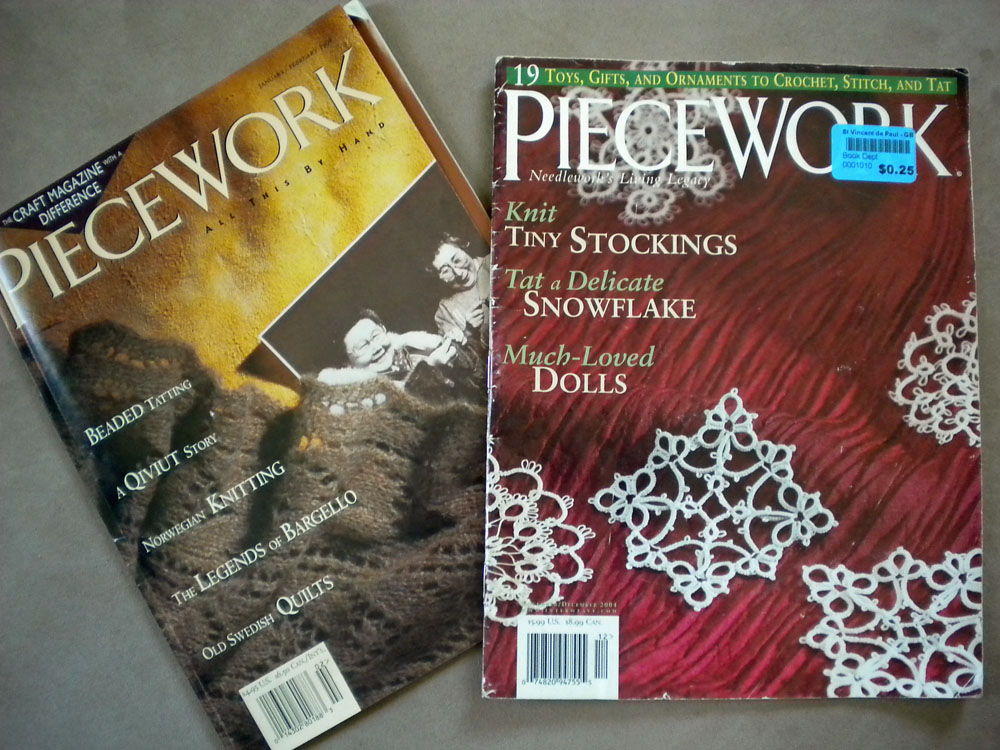
My parents visited this past week and as usual, we enjoyed many conversations revolving around our UFOs (unfinished objects), current projects, and things we will get to one of these days. Mom patrols used book stores and thrift shops and came across some old Piecework magazines. This is a wonderful publication, covering every kind of needlework from around the world and giving the history to go with the projects. When she finished with these back issues, she passed them along to me.

Piecework Magazine Jan/Feb 1996 (left) and Nov/Dec 2004 (right)

Piecework Magazine Jan/Feb 1996 (left) and Nov/Dec 2004 (right)

I was delighted to see articles on tatting to follow up on my recent exploration of that craft. One even describes threading small beads into the tatting—now there’s something I have got to try!

But something else is intriguing in these back issues. Since I started reading the magazine, knitting has featured prominently in the projects—knitted lace, knitted mittens, knitted sweaters. These older issues do have knitting, but counted cross stitch is a central technique—embroidered yokes, embroidered ornaments, embroidered samplers—and more quilting than appears now.

Handwork is fluid. Crafts ebb and flow in popularity. When my grandmother told me that tatting was a dying art, little did she suspect that within 20 years, it would experience a resurgence. In the 60’s, 70’s, and 80’s, weaving and spinning were very popular. Many of us who are weaving now, learned then. In the past 10 years, though, it seems like there are fewer of us actively weaving and fewer weaving publications. Give it time though. Weaving is an ancient skill and those of us still weaving keep sharing what we know so that future generations can join the web in their own time.

An Ode to Overshot

13 Tuesday May 2014

Posted by jeanweaves in Coverlets, Overshot, Weaving Inspiration

≈ Leave a comment

Tags

Coverlets, Early American Weaving, Handwoven Magazine, Overshot

Everywhere I turn lately, I’m seeing overshot. Or maybe I’m just more aware of it because I used that weave structure for my mug rugs (see previous post).  But the March/April issue of Handwoven Magazine did include an article about researching a found coverlet , “The Story of the Martin Brenneman Coverlet” by Tom Knisely followed by a project for a table runner in overshot. And there are numerous books – books on my very own bookshelf!—about overshot. So I want to take another look at this weave structure.

Overshot Throw woven in wool and cotton

Overshot Throw woven in wool and cotton

It’s curious how weaves come and go. And it’s amazing what is woven today in structures that have been around a really long time, how structures are combined and envelopes are pushed, making something old speak to today! I think that’s why overshot is showing up again.

I recently reread American Woven Coverlets by Carol Strickler (Loveland, Colorado: Interweave Press, 1987).  Strickler writes here for anyone interested in coverlets, not just for weavers. She defines a coverlet as “a hand-woven bedcover with loom-controlled pattern” and differentiates coverlets from quilts (quilts are two or more separate fabrics put together like a sandwich). She goes on to cover the why, the when, the who, and the where of coverlet weaving.  She includes chapters on the fibers, the equipment, and the patterns used to weave coverlets. It’s a fascinating and very readable book for weavers and non-weavers alike.

Another book referenced by Strickler and one that I’m currently reading is Keep Me Warm One Night: Early Handweaving in Eastern Canada. Burnham, Harold B. and Dorothy K. Toronto: University of Toronto Press, 1972. This is a classic! Strickler notes that although this book only discusses Canadian coverlets, the patterns, materials, and equipment used are “closely related to a large portion of Eastern American weaving.” (bibliography). More on this classic next time.

What appeals to me about both coverlets and overshot is that they were often woven at home by the homemaker. The looms that these weavers used were usually simple four shaft looms. The materials were often spun and dyed at home. And the weavers were busy with the demands of life, but found time to create beautiful household linens with the materials at hand. My deepest respect to the weavers who have gone before me.

Giving Thrums a New Life

24 Thursday Apr 2014

Posted by jeanweaves in Overshot, Thrums

≈ 1 Comment

Tags

Handwoven, Mug Rugs, Overshot, Thrums

Earlier this year I made a goal, a New Year’s resolution of sorts, to work more from my stash. I’ve made some towels with a rick-rack cotton yarn, followed by some placemats in a heavy cotton woven in block weave. There is still my thrum basket.

Thrums are the short pieces of yarn left at the end of the warp. They are too short to weave anything useful, but I ache at just throwing them away. Each warp takes a lot of planning and throwing away 300-400 pieces each 20” to 24” inches long is against my nature. But what can I do with them (other than bundling them up and putting them in a basket for some future project?)

For ideas, I pulled up my Handwoven Magazine indexes and looked up “thrums”. (Yes, I do keep my back issues—they inspire and entertain, even if they are 20 or 25 years old!) In the September/October, 1991 issue, Margaret Gaynes presented an overshot potholder design. She used her thrums as the pattern weft and bordered the potholder with bias tape to cover the cut ends on each side. There was the beginning for my project.

Instead of potholder, I chose to make mug rugs– those fabric coasters for your coffee mugs and water bottles. I like the idea of using an overshot design and chose a pattern with one large motif for each piece. Mug rugs are often fringed on the cut ends, but I needed to do something with the sides where my short thrums will hang off. The answer here is to apply a side fringe as well. This is accomplished by threading a dummy warp for the width of that side fringe. Then when the project is off the loom and machine-stitched around each mug rug, that warp is removed and the fringe remains.  Of course, I’m back to wasting yarn.

Mug Rugs from Thrums

Mug Rugs from Thrums

I’m still sampling to get the perfect size. The first mug rug had fringes that were too short (top). The second one, on the left, seemed too big to me (6-1/2” square with fringe). The third one, on the right, is sett closer, so it is 6-1/2” x 7” with fringe; still too big. Next I will use a finer ground weft to see if I can get down to a 5-1/2” square mug rug. I’m getting there.

Do you have ideas for using thrums? Let me know!

The Joy of the Process

14 Monday Apr 2014

Posted by jeanweaves in Tatting, Uncategorized

≈ 2 Comments

Tags

Fiber Arts, Tatting, Weaving

I had an interesting conversation with my mother this weekend. She met two women at a community presentation who gave a program on tatting.

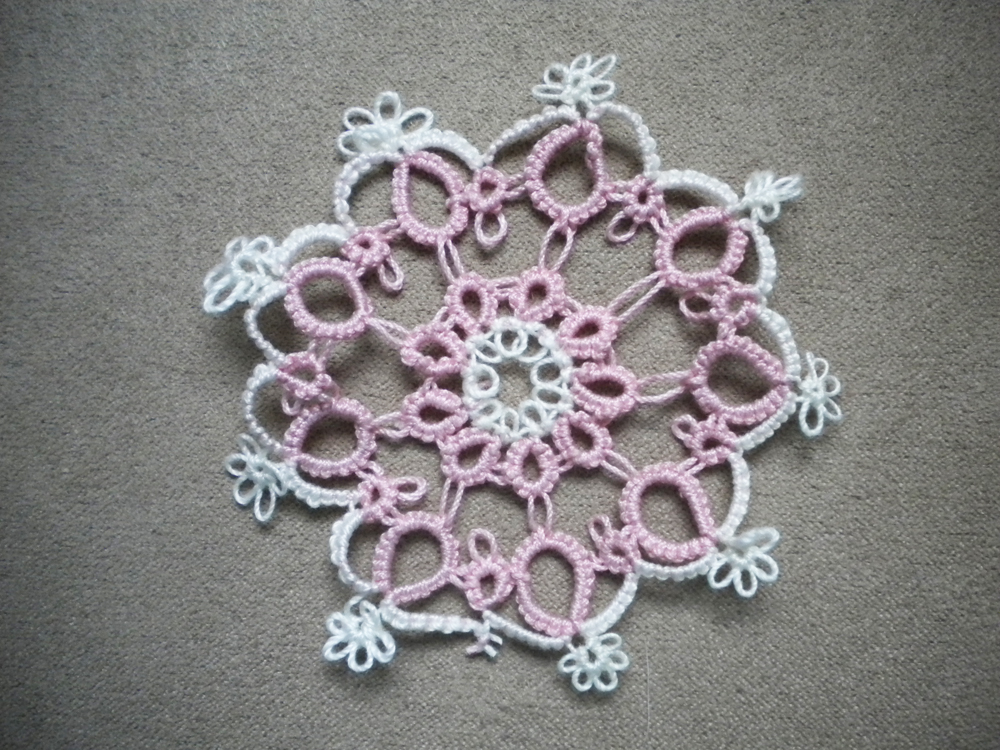
Tatting is a form of lace making. When I was a child, my grandmother told me tatting was a dying art. That was all it took for me to try to learn how to do it. I don’t recall my grandmother tatting—my great aunt was the tatter in the family—but she knew how to point a child in the right direction! I learned the basics of rings and chains after a fashion, then set it aside.

Tatted Ornament

One of my first finished pieces of tatting!

Fast forward to 2014. I mentioned to someone in my guild that I kept trying to tat, but not really knowing what I was doing, didn’t get much beyond a few rings. She organized a tatting class over two Saturday mornings and now I’m on my way again. Thanks, Ginny!

It seems that one skill leads to another and then to another. Some weavers spin in addition to weaving. Spinners often knit and crochet. Weavers and spinners sometimes dye their own fiber. And those with wool sometimes felt it. I surprised a fellow guild member recently by admitting that I spin. It’s a tactile activity that soothes the soul, and I enjoy it. Like I enjoy tatting, knitting, and crocheting. And I’ve even tried my hand at making a booklet. It’s the joy of the process, the joy of working with my hands.

Like my grandmother challenged me long ago, I challenge you to try something new. Pick up a craft you haven’t tried before or return to one you’ve set aside. Rediscover the joy of the process and working with your hands!

The Draft That Didn’t

20 Thursday Mar 2014

Posted by jeanweaves in Napkins, Placemats, Uncategorized

≈ Leave a comment

Tags

Handwoven, Napkins, Placemats

Color Block Placemats off the loom

A funny thing happened with those napkins on my “To Weave” list. I started out with one plan and ended up with another. But let me go back a bit.

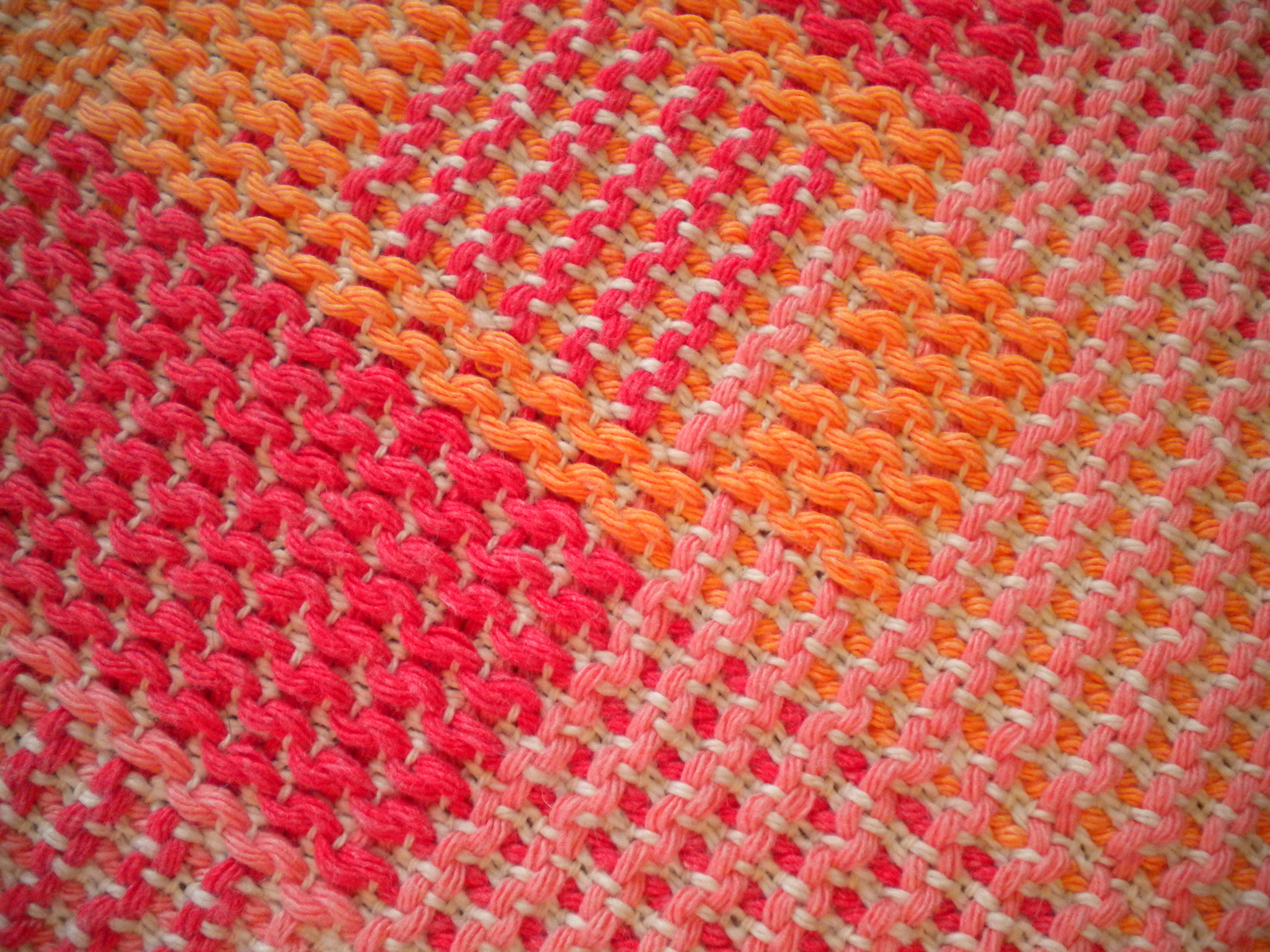
A couple months ago, I began purposely planning projects to use up some old yarn. I have some heavy cotton blend yarn in spring-like colors that were ripe for the weaving during those cold, snowy days. For the first project, I chose the medium orange (think tangerine), a perky red (strawberry–I see a theme here), and peach. The colors really do work together! They became color block placemats with an off-white cotton ground thread as the tie-down.

Color Block Block Placemats

Color Block Placemats off the loom

As I weave placemats, I think about the napkins that should go with them.  Not everyone uses napkins (my husband never seems to need one) but many of us need protection from our food.  I’m speaking from personal experience here.  And I like my napkins to at least pretend to go with my placemats.  So when these placemats came off the loom, it was time to tackle the napkins.

I don’t have light weight cottons in colors to match the placemats perfectly, but I have plenty of off-white on hand.  To add a little sparkle, I alternated mercerized and unmercerized across the warp.  But I needed a weave structure that would play well with the bold blocks of the placemats.  I turned to A Weaver’s Book of 8-Shaft Patterns edited by Carol Strickler (1991 Interweave Press). In the chapter on twill blocks, there’s a nice twill and basketweave combination that looked like it would work, but after threading the loom and weaving for several inches, I wasn’t so sure.  I checked my tie-up, my threading, and my treadling for errors, unwove and rewove, but it still didn’t match my mind’s picture for my napkins.  So I took a walk to consider what to do with 8.5 yards of off-white warp threaded for block twill.

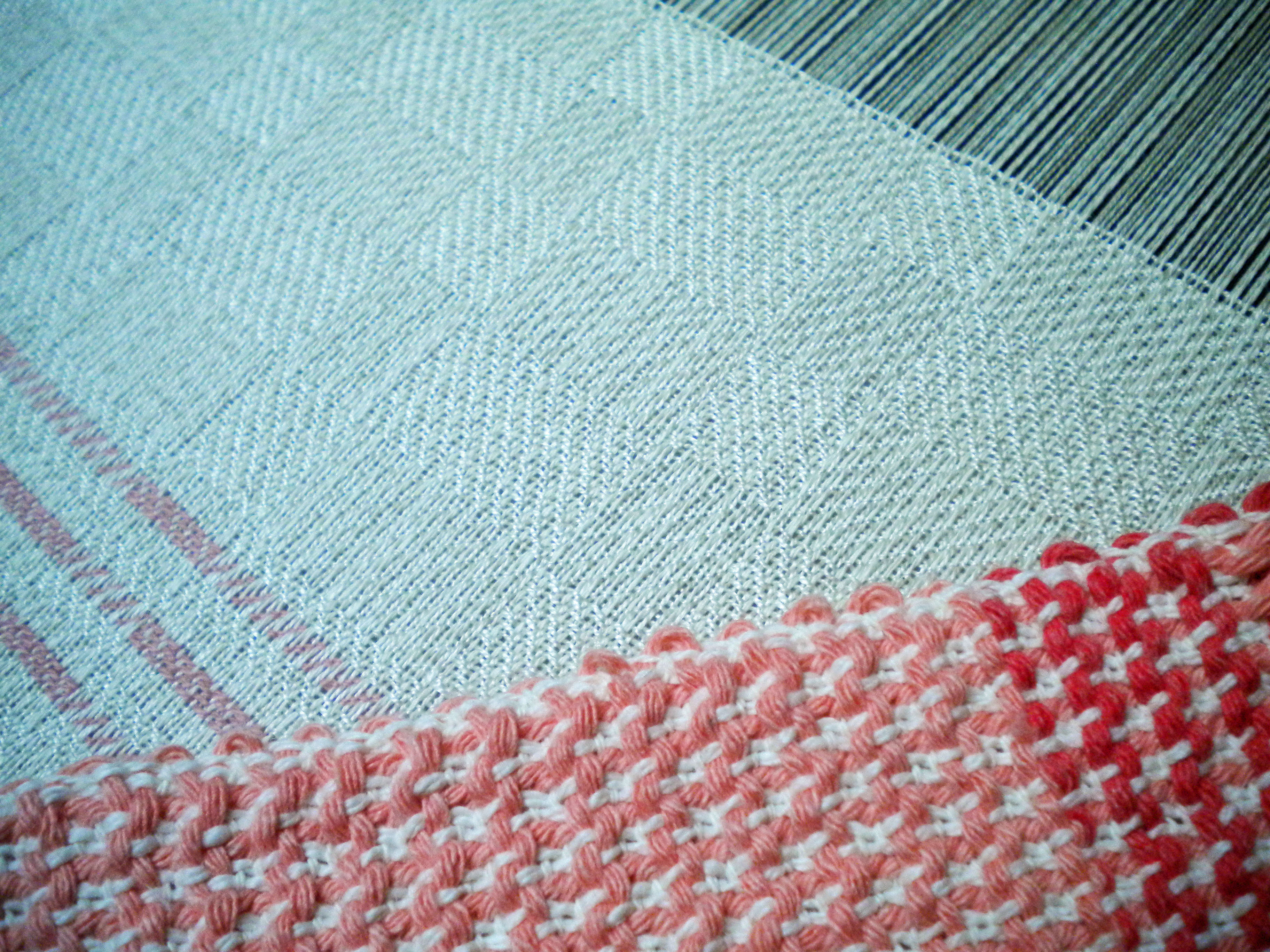
The obvious choice was to just treadle those twill blocks as they were threaded. Because I was using a 3/1 and 1/3 twill, the way the light hits the two blocks makes them look distinctively different, matt versus shine.  The 10/2 cotton gives a nice hand to the cloth and with washing, will soften even more.

Twill block napkins

Twill block napkins on the loom

I’m looking forward to seeing how they turn out after they are finished.

← Older posts
Newer posts →
Shop!

Follow Us

  • Facebook

Galleries

  • Towels to Use and to Give
  • Runners
  • Scarves for Him and Her
  • For the Table
  • Note Cards
  • Animals
  • Throws
  • The Linen Press
  • Privacy Policy

Subscribe

  • RSS - Posts
  • RSS - Comments

Archives

  • September 2020 (2)
  • October 2019 (1)
  • August 2019 (1)
  • July 2019 (2)
  • June 2019 (2)
  • March 2019 (1)
  • November 2018 (2)
  • September 2018 (1)
  • July 2018 (2)
  • May 2018 (2)
  • April 2018 (1)
  • February 2018 (2)
  • January 2018 (1)
  • December 2017 (1)
  • November 2017 (2)
  • October 2017 (3)
  • August 2017 (1)
  • July 2017 (1)
  • June 2017 (2)
  • May 2017 (2)
  • March 2017 (2)
  • February 2017 (2)
  • January 2017 (2)
  • December 2016 (1)
  • November 2016 (1)
  • October 2016 (2)
  • August 2016 (3)
  • June 2016 (1)
  • May 2016 (1)
  • March 2016 (2)
  • February 2016 (1)
  • January 2016 (1)
  • December 2015 (1)
  • November 2015 (3)
  • October 2015 (1)
  • September 2015 (4)
  • August 2015 (1)
  • July 2015 (2)
  • June 2015 (1)
  • May 2015 (1)
  • April 2015 (2)
  • March 2015 (2)
  • February 2015 (2)
  • January 2015 (2)
  • December 2014 (1)
  • November 2014 (3)
  • October 2014 (1)
  • September 2014 (2)
  • August 2014 (1)
  • July 2014 (3)
  • June 2014 (1)
  • May 2014 (2)
  • April 2014 (2)
  • March 2014 (2)
  • February 2014 (2)
  • January 2014 (2)
  • December 2013 (2)
  • November 2013 (1)
  • October 2013 (1)
  • September 2013 (3)
  • August 2013 (1)

Blog at WordPress.com.

Privacy & Cookies: This site uses cookies. By continuing to use this website, you agree to their use.
To find out more, including how to control cookies, see here: Cookie Policy
  • Subscribe Subscribed
    • jeanweaves
    • Join 62 other subscribers
    • Already have a WordPress.com account? Log in now.
    • jeanweaves
    • Subscribe Subscribed
    • Sign up
    • Log in
    • Report this content
    • View site in Reader
    • Manage subscriptions
    • Collapse this bar
 

Loading Comments...