• Home
  • Shop
  • About
  • Exhibits
  • Contact me

jeanweaves

~ Jean Williams, Handweaver

jeanweaves

Tag Archives: creative inspiration

Color Study Continued

01 Wednesday Jul 2015

Posted by jeanweaves in Color, Towels

≈ 2 Comments

Tags

Color, Cotton, creative inspiration, Weaving

Kitchen Towel in Colors and Checks

Kitchen Towel in Colors and Checks

Continuing last week’s color contemplations, I wove on, and now the warp is finished and off the loom.

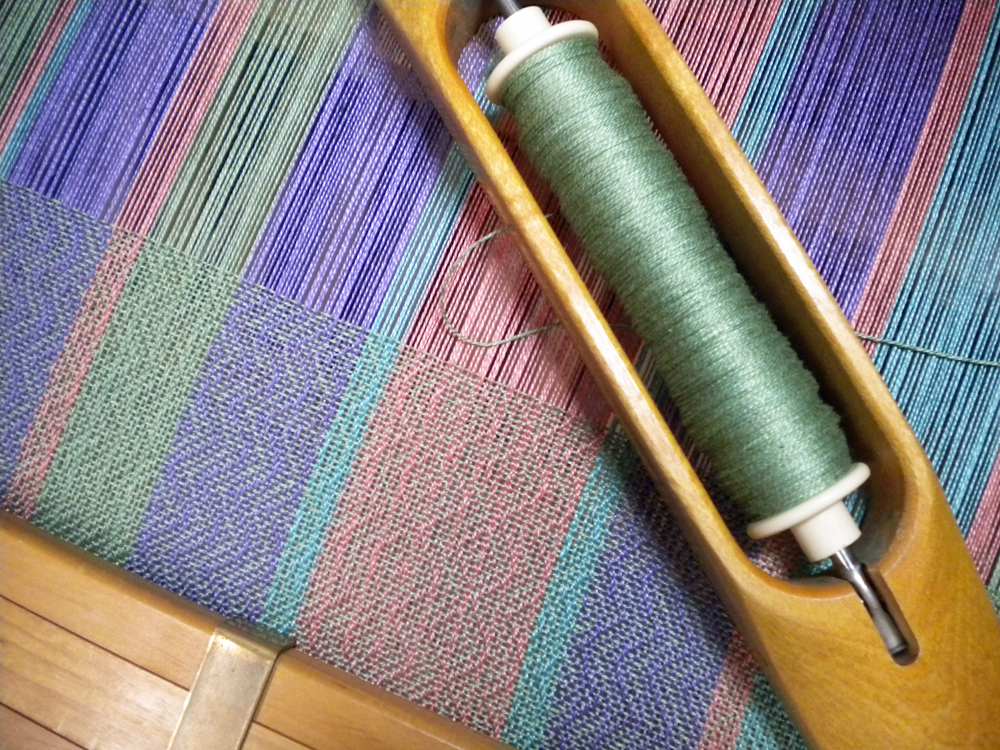
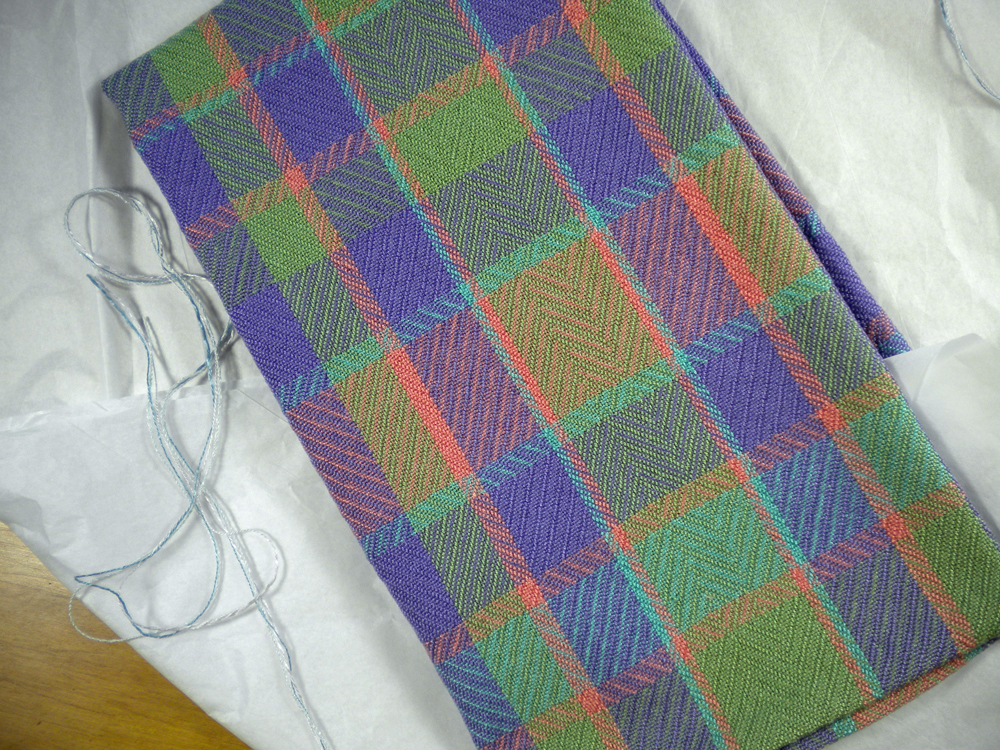
I had wondered if the colors would work. I chose UKI’s Scarab, Quince, Duck, and Lavender. For the record, “Duck” is what I would call a muted turquoise; “Scarab” is what I would call a soft apple green, and “Quince” looks like peach more than orange. And for the most part, I think these colors did play well together. They are similar in value but do come from different regions on the color wheel.
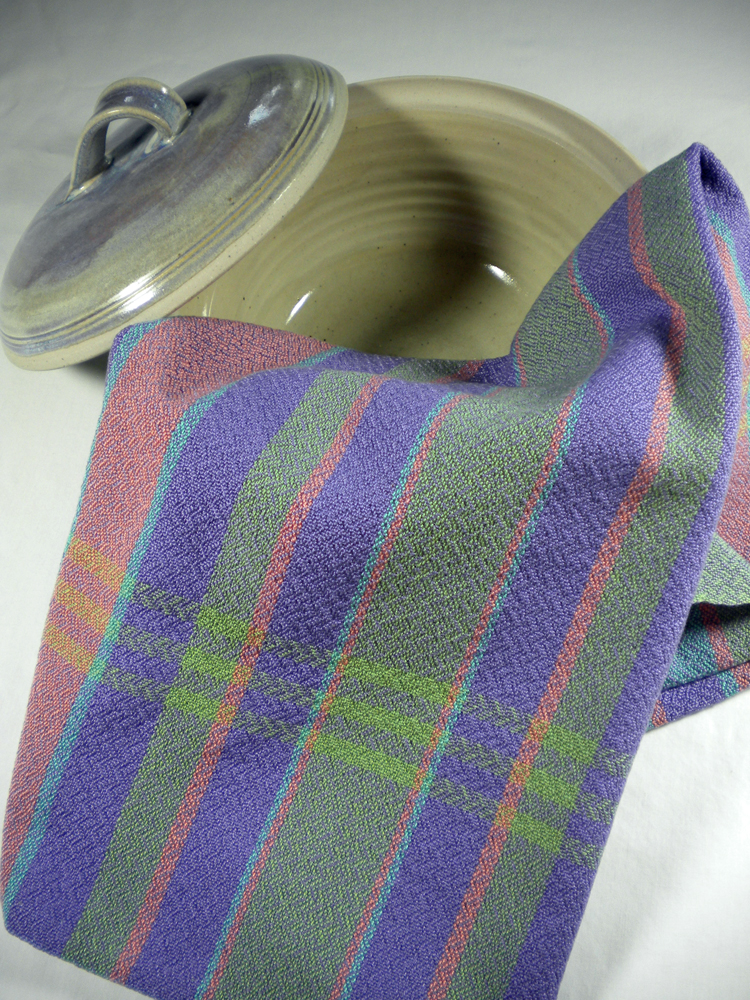
Kitchen Towel Stripes and Lavender

Kitchen Towel Stripes and Lavender

In weaving, it’s not just about how colors will look next to each other, but also how the eye will “read” them from a distance when weft crosses warp. In that respect, two of my choices didn’t work as well as the others. When crossing, Scarab and Duck simply greyed each other out. I was careful not to place them side by side in the warp, but when I used one of them as weft, it necessarily crossed the warp stripe of the other.

There are always surprises.  I’m surprised at how the Scarab pops here. On the cone, it is a soft green, but with the other colors, it fairly jumps off the fabric. And depending on the lighting and what it’s next to, the Quince make look gold or pink.

On one pair of towels I used a denim blue weft, a color I thought would recede and allow the warp stripes to stand out. It did just that, as well as softening the whole look in a nice way.

Color is such a subjective thing. What pleases my eye may jar yours. What is soothing or cheerful to one may be distracting and brash to another. While manufacturers may set their “Color of the Year” and expect us to follow their lead, sometimes I just want to break out in my own melody and scheme.
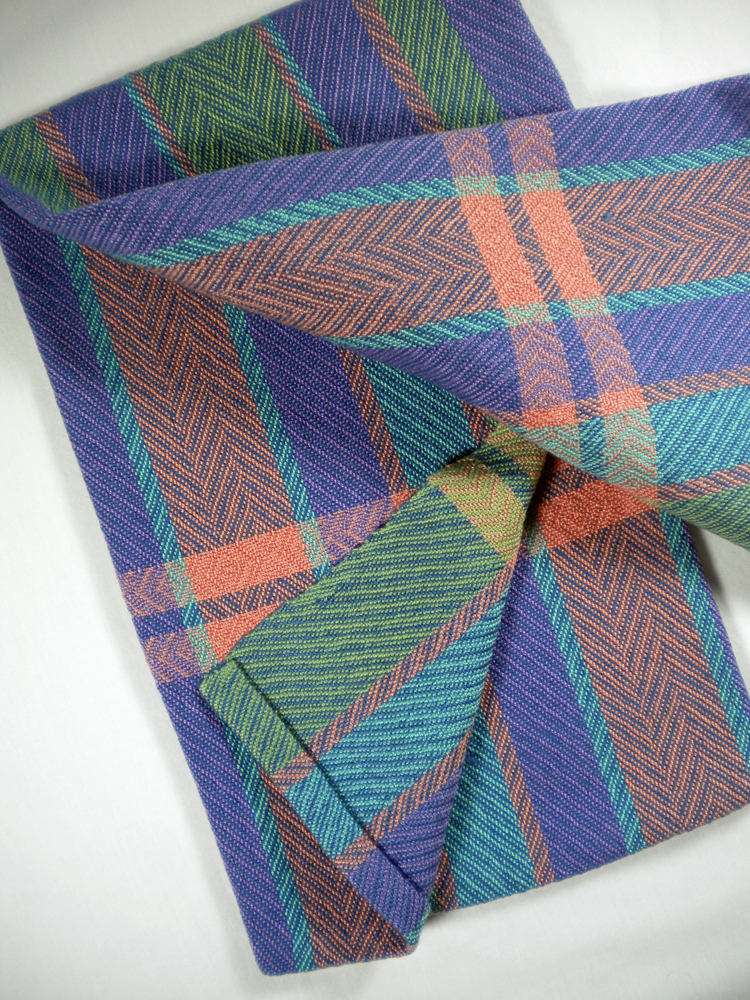
Kitchen Towel Stripes and Denim

Kitchen Towel Stripes and Denim

I have only looked through the window of the whole study of color theory. Someday, I may walk right in and commit to a more thorough exploration, but for now, I note what seems to work on the loom and go on from there. This was a fun project and having made notes on the results, I will continue to learn and continue to be surprised.

What color experiments are you working on?
Hmm…Does that work?

23 Tuesday Jun 2015

Posted by jeanweaves in Color, creating, Planning, Weaving Inspiration

≈ 5 Comments

Tags

Color, creative inspiration, Textiles, Weaving, Yarn

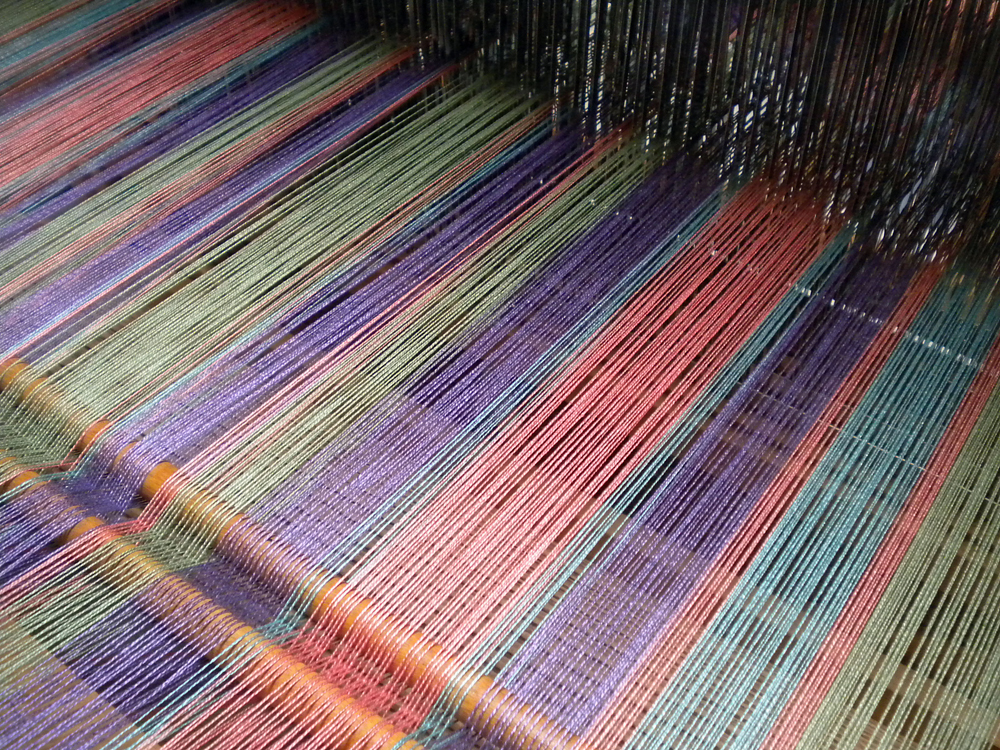
Winding my new warp gives me pause—do these colors work?

A choice of colors

A choice of colors

Planning colors can be one of the most difficult parts of the weaving process for me. I’ve designed some real ‘dogs’ in my years at the loom, and other times, the colors just glow. I’m definitely more of a “pattern/structure” weaver and a “color/texture” weaver.

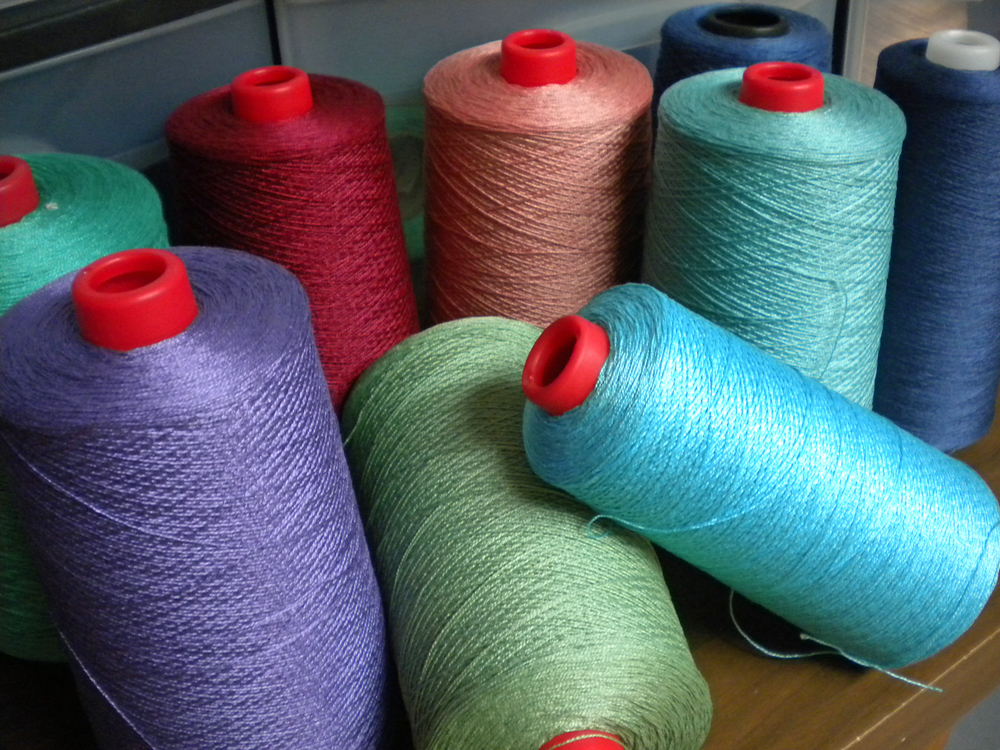
Recently I’ve been weaving workshop samples and neutral colors, and really, this week I needed some color. So I went to my shelf and started pulling out cones. Reds, purples, blues, peach, turquoise, green. Which should I choose? Which colors will play nicely together?

Sampling would be the wise route to take, but I’m very impatient to get this one the loom. That may come back to haunt me.

Threaded warp from the back

Threaded warp from the back

I remember hearing Sharon Alderman talk about color—look at what Mother Nature puts together and use that as a starting point.

Okay. I can see some of these colors in my flower garden, but not all of them on the same stem. After some sorting, I settle on UKI’s Quince (a dark peach), Duck (close to turquoise), Lavender, and Scarab (a soft sage green) for towels. (Color names are interesting—can you just imagine someone saying “We’ve already got a green. What should we call this shade?”) As I wind the warp, I have second thoughts, but it’s too late now. Such indecision!

I sley the reed. Hmm…I hope this works.

It takes the better part of a day to thread a broken twill that will make up a vibrant towel warp—I hope! Lots of time to wonder…

Okay, today I wound the warp onto the back beam and tied the warp to the breast beam—all 642 threads, each 7 yards, 21 inches. The colors of the mercerized cotton glow. A few inches woven show that hey, this might work after all.

Testing the Warp

Testing the Warp

With house guests for the next week and a family wedding to follow, the warp will wait for confirmation. And I will still need to decide on weft colors, but every time I walk by the loom, I’ll think about these colors and dream about some nice colorful towels.

How do you choose the colors for your next project?

Another Take on Doubleweave

19 Tuesday May 2015

Posted by jeanweaves in Doubleweave, Weaving Inspiration

≈ 3 Comments

Tags

creative inspiration, Doubleweave, Handweaving

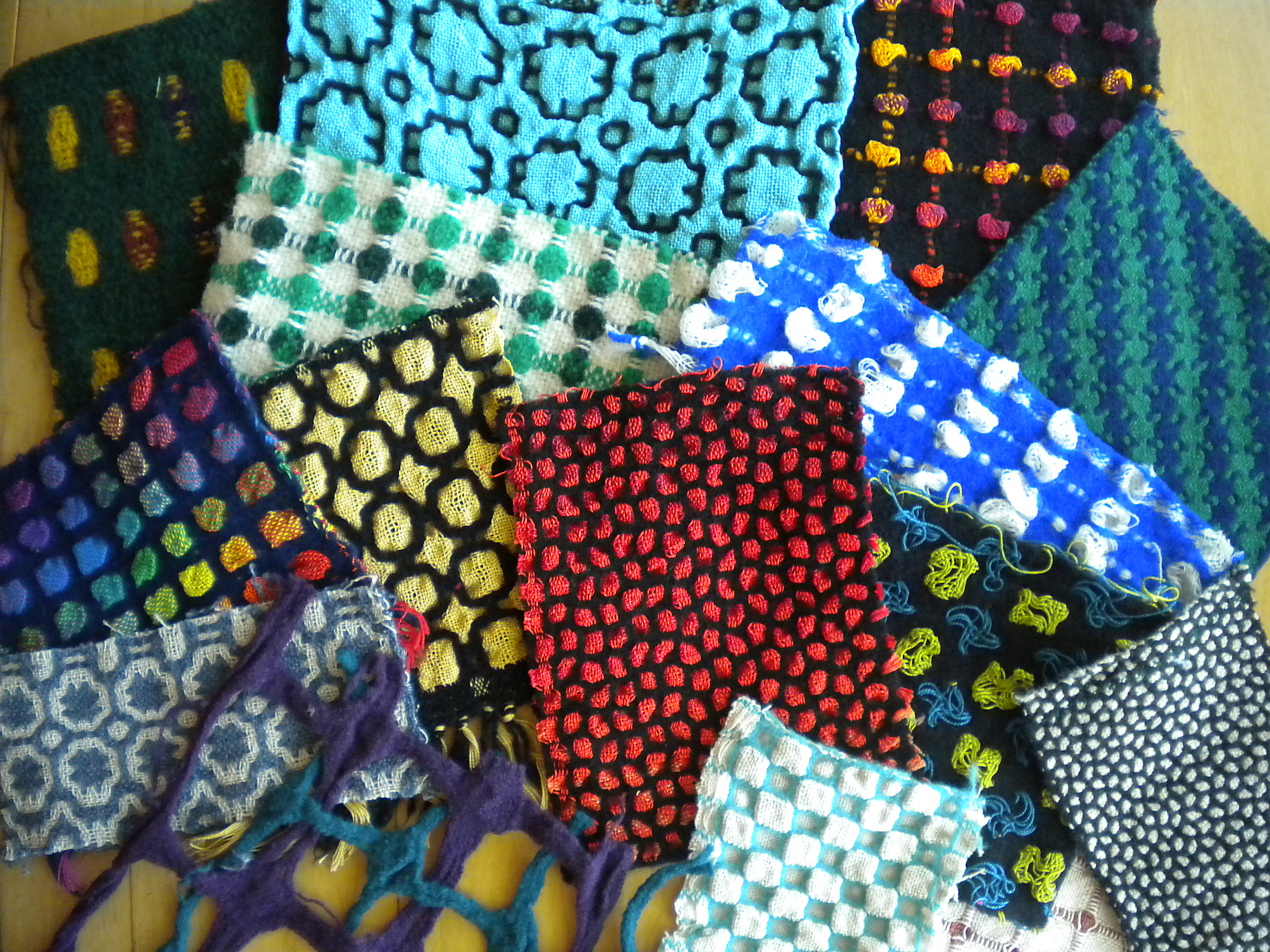
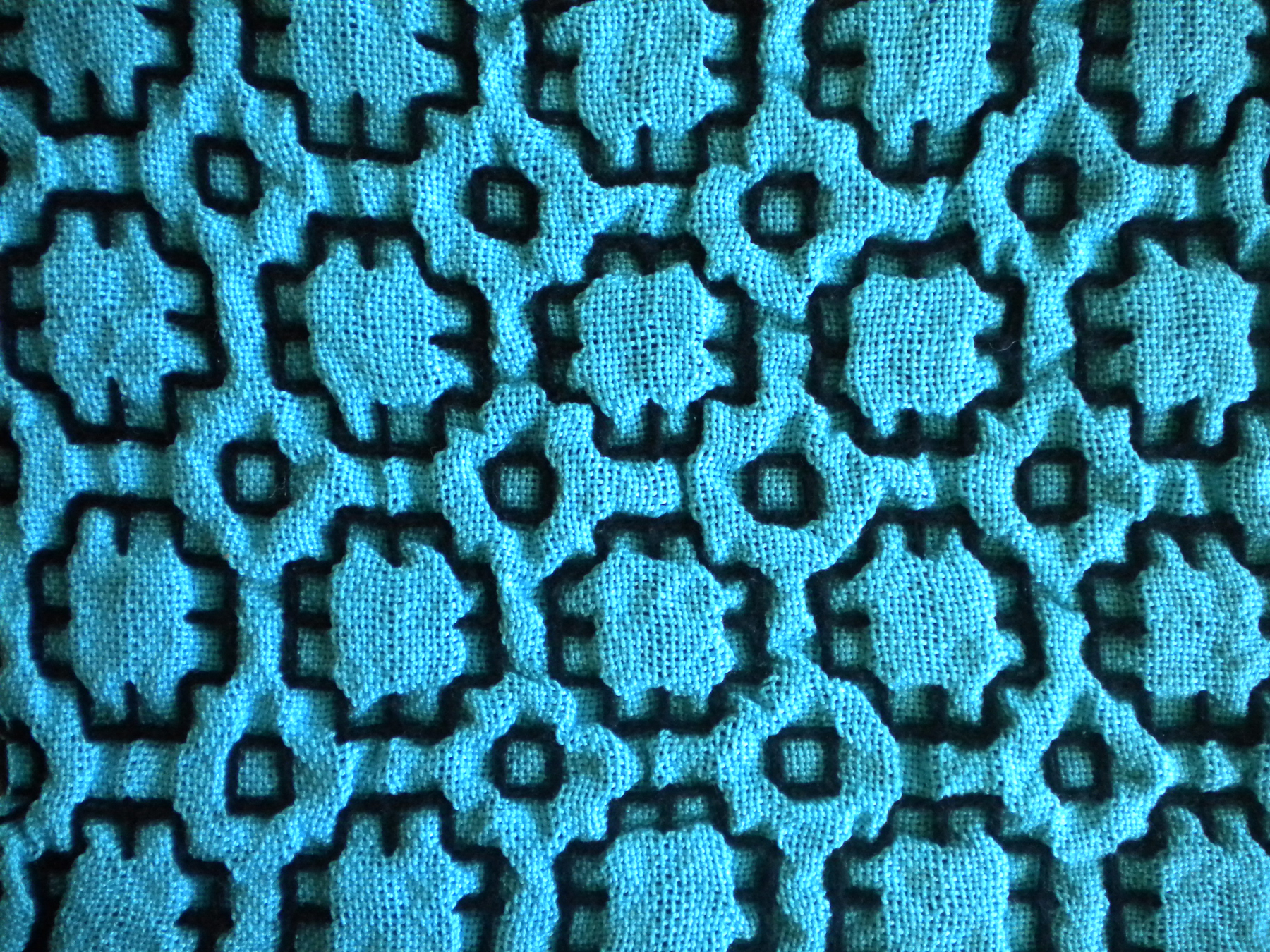
Samples from the Deflected Doubleweave Workshop

Samples from the Deflected Doubleweave Workshop

Three days of weaving camaraderie. Three days of figuring out unfamiliar drafts and different looms. Three days of decoding weaving theory. Three days with well-known weaving teacher and writer, Madelyn Van der Hoogt.

Our guild hosted Madelyn for a three-day workshop on Deflected Doubleweave for Flat and Collapse Fabrics last weekend. Some of us in the workshop have been weaving for years; some for only months. But the drafts challenged and delighted us all as we saw threads go from rectilinear on the loom, to curvy and lumpy after washing.

We each threaded a loom in an assigned draft with fine merino wool, cotton, or a wool/silk blend. Some of the drafts were sett very wide to give the yarn room to move in the finishing process. The warps looked dramatically different from what the final fabric looked like.

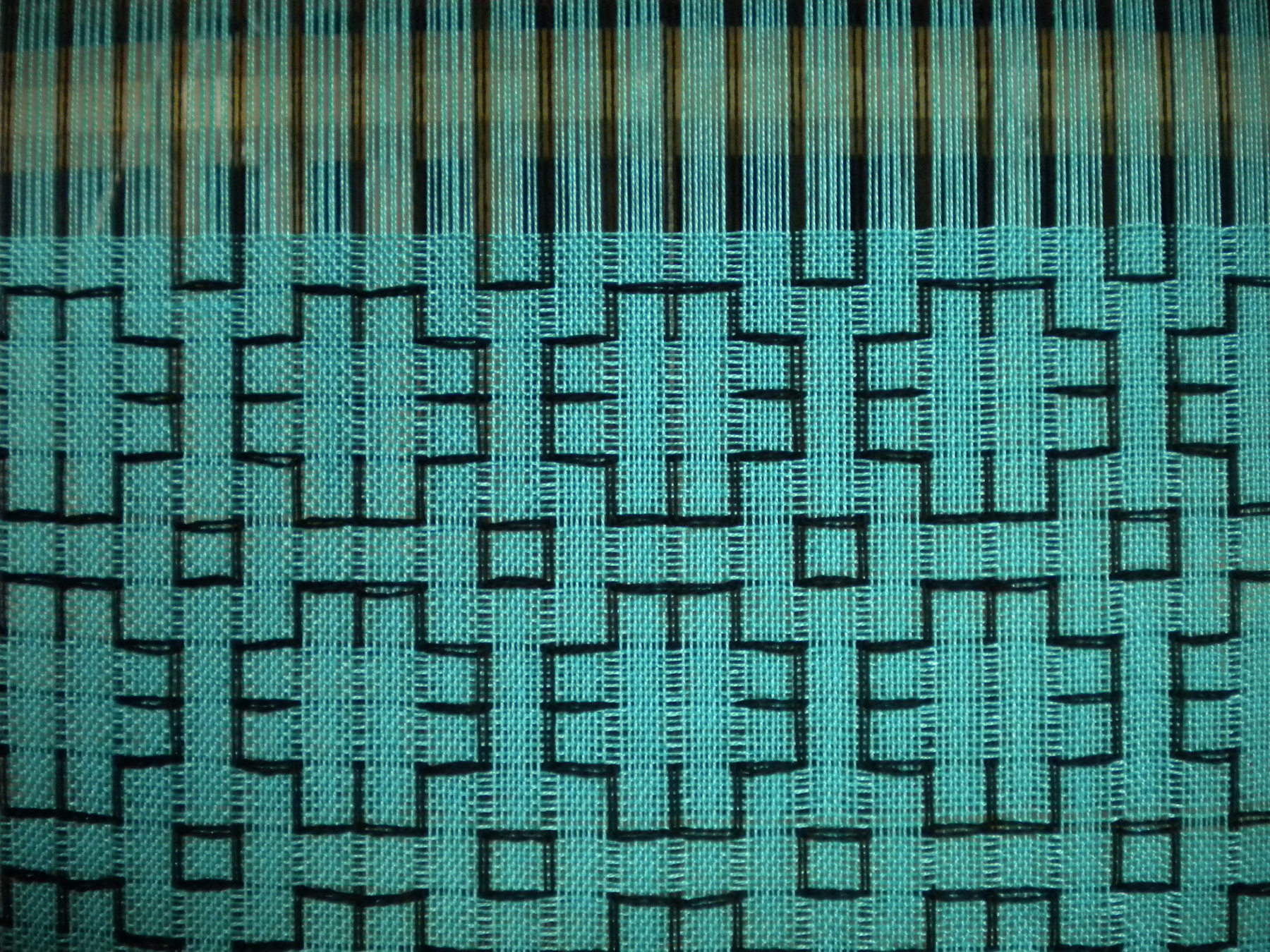
Deflected Doubleweave on the loom

Deflected Doubleweave on the loom

We each wove the first sample, cut it off, and washed it to see what the fabric would do. My draft used a fine wool with a 10/2 mercerized cotton. The wool shrunk, of course, which pulled the cotton areas together in puffy figures across the surface; fun! During the course of the weekend, we wove samples on each other’s looms and came away with 16 different examples of yarns doing strange things.

There were samples that looked like mosaics, lacy samples, and polka dot samples. Over and over, we heard to weave square. On some drafts, this meant to barely set the weft in. On other drafts, a normal beat was needed. The trick was to adjust my beat as I moved from a lacy sample to a firm sample. I didn’t always make the adjustment and my samples show it.

In between weaving, Madelyn taught weaving theory—comparing what the threads were actually doing structurally versus what the design looked like. Doubleweave is two independent surfaces connected in some way. It is usually threaded dark-light-dark-light, thread by thread. With four shafts, you can weave light on top and dark on bottom or vice versa. As you use more shafts, you can weave more blocks.

Deflected doubleweave is a block weave; groups of threads from one surface alternate with groups of threads from the other surface. While a drawdown will show you that you have a group of dark threads weaving plain weave over a group of light threads, that drawdown doesn’t show you that because of the sett and floats, those dark threads will slide over the light threads. And the fiber you choose can dramatically change the look of the design. Whether you choose a shrinking yarn for blocks A and C or for blocks B and D will determine whether you get circles, squares, or something entirely different.

Deflected Doubleweave after washing

Deflected Doubleweave after washing

At the end of the third day, we took the warps off our looms, washed them to get the threads to do their “thing”, and passed out everyone’s samples. We discussed what worked, what didn’t and what we could try to get a different result.

What a treat to listen to Madelyn’s stories and explanations of what the threads are actually doing in relation to what they look like they are doing. This isn’t as easy to grasp as it might seem. She admits it. She laughs about trying to put all this into words. That makes us feel better about not “getting it” all the time.

At the end of the workshop, we left with more than just samples. Madelyn gave us much food for thought and inspiration for further exploration.

The Evolution of an Idea

12 Thursday Mar 2015

Posted by jeanweaves in Coverlets, Doubleweave, Weaving Inspiration

≈ 3 Comments

Tags

Coverlets, creative inspiration, Doubleweave, Early American Weaving, Weaving

Block Doubleweave, Second Warp

Block Doubleweave, Second Warp

Every project starts somewhere, inspired by some need, some desire for color, a picture in a book or magazine, a piece in a store window. My Mom tells the story of her grandmother seeing a crocheted doily in a shop window during the Depression, studying it, and then going home to recreate it. Inspiration!

Weaving drafts give the directions that tell the weaver what to do. Drafts consist of four elements:

  1. the threading: the order the threads are arranged
  2. the treadling: which treadle to press when
  3. the tie-up: how those treadles are connected to the shafts
  4. the draw-down: what the pattern will look like with all of the above

    Doubleweave Draft

    Doubleweave Draft

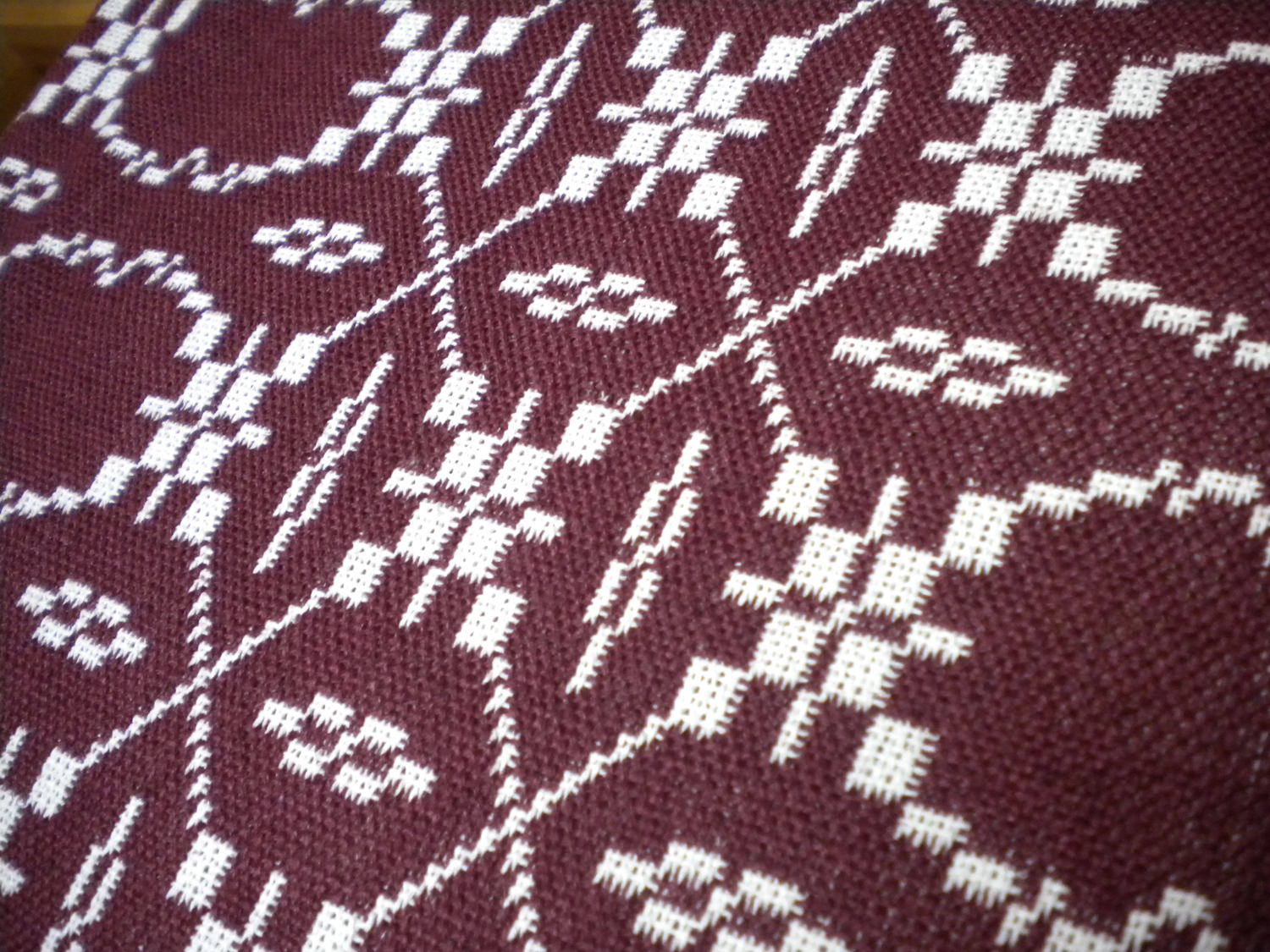
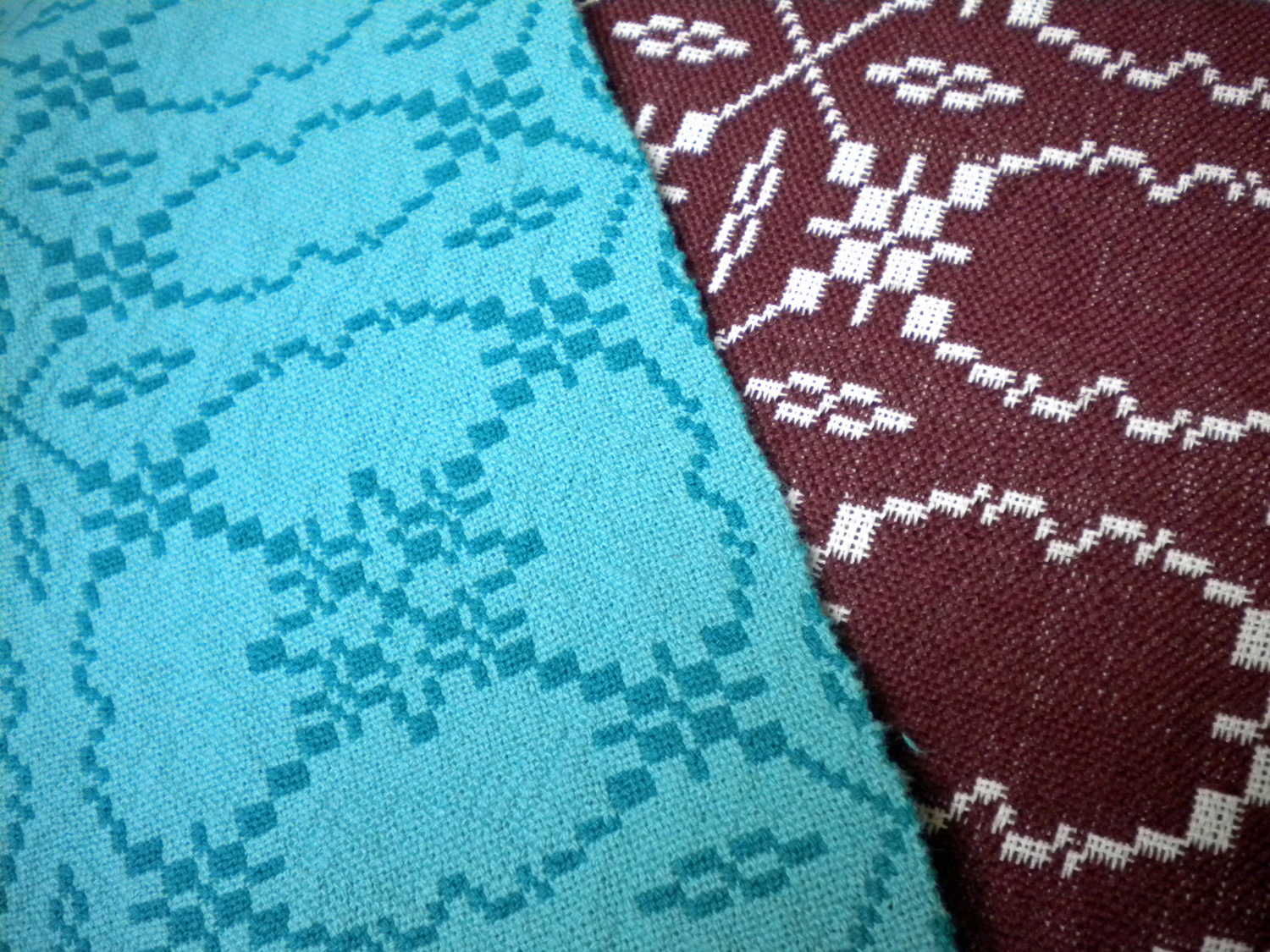
The inspiration for my block doubleweave goes back to a class at Madelyn Van der Hoogt’s Weavers School when it was still in Missouri. I pulled out my class notes and studied the draft. The blocks – the areas where the colors change – form a pine tree and snowball design, but what if I changed the order of those blocks? How would the overall design change?

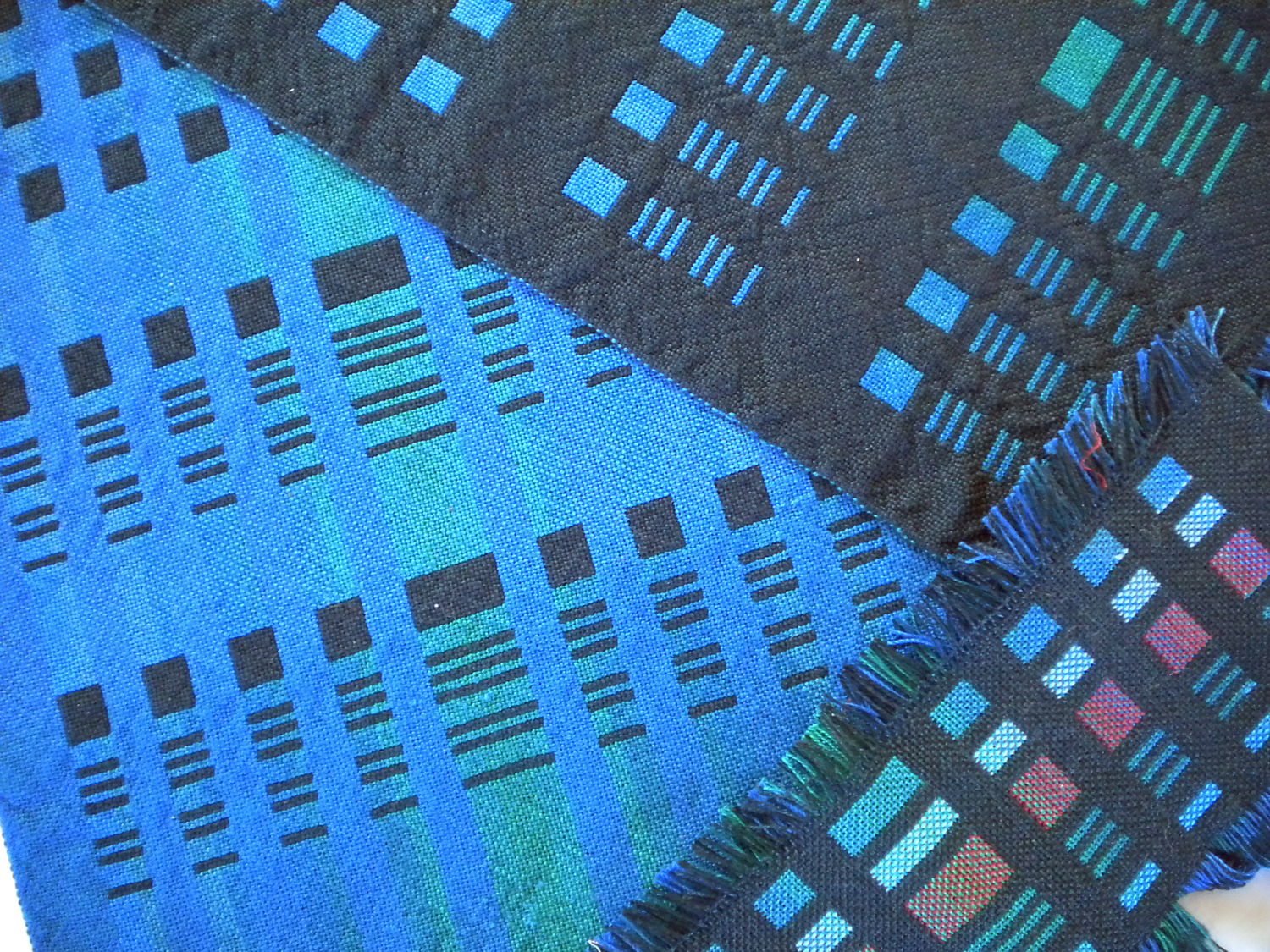
The easiest way to change a pattern is to treadle it differently, so I played around with the order of those blocks. Weaving the blocks in the same order as they are threaded, “as drawn in,” produces rings in the corners with ovals and diamonds in the center, like the green placemats. But I’m not a production weaver, so after weaving a couple placemats in this design, I started to ponder how to change it yet again without rethreading.

Doubleweave Designs Evolving

Doubleweave Designs Evolving

Again, I looked at the block order. What if I treadled just one set of blocks over and over? How about treadling them in point order – back and forth, one repeat of each? There are so many possibilities. I have the second pattern on the loom now in a natural pattern against a deep wine background, and a third set will tie on after it in yet different colors. Three different designs with one threading, just by changing the block order!

This is the evolution of design.

New Year, Revisiting Old Techniques

16 Friday Jan 2015

Posted by jeanweaves in Doubleweave, Planning, Weaving Inspiration

≈ Leave a comment

Tags

creative inspiration, Double Weave, Handwoven Magazine, Table Runners, Weaver's, Weaving

January holds all sorts of possibilities. Old deadlines are past and there’s time now to consider more carefully what goes on the loom rather than assuming it will be another towel run. This is a great time to revisit those weave structures that I don’t get to work on usually.

Last January I sampled some Finn weave and figured double weave. That was a small project just to see if I could do it. But all through the year, a thought was niggling at the back of my mind: what if I set up the draw loom for double weave? I’ve done it before, although it’s been many years ago. Can I do it again?

Double weave articles abound in Weaver's and Handwoven.

Double weave articles abound in Weaver’s and Handwoven.

The first step for now was to review what resources I have on double weave. I have many back issues of Weaver’s and Handwoven. “Colonial Double Weave” by Madelyn Van der Hoogt in Weaver’s Issue 12 has great cross-section drawings of what the threads are actually doing and how to weave an overshot pattern as double weave. Then Weaver’s Issue 17 has several articles on double weave color and design. Weaver’s Issue 32 has articles by Bonnie Inouye and Doramay Keasbey on manipulating double weave drafts. And the November/December 2011 Handwoven has an article by Judith Yamamoto and Patricia Stewart on two different takes of one draft.

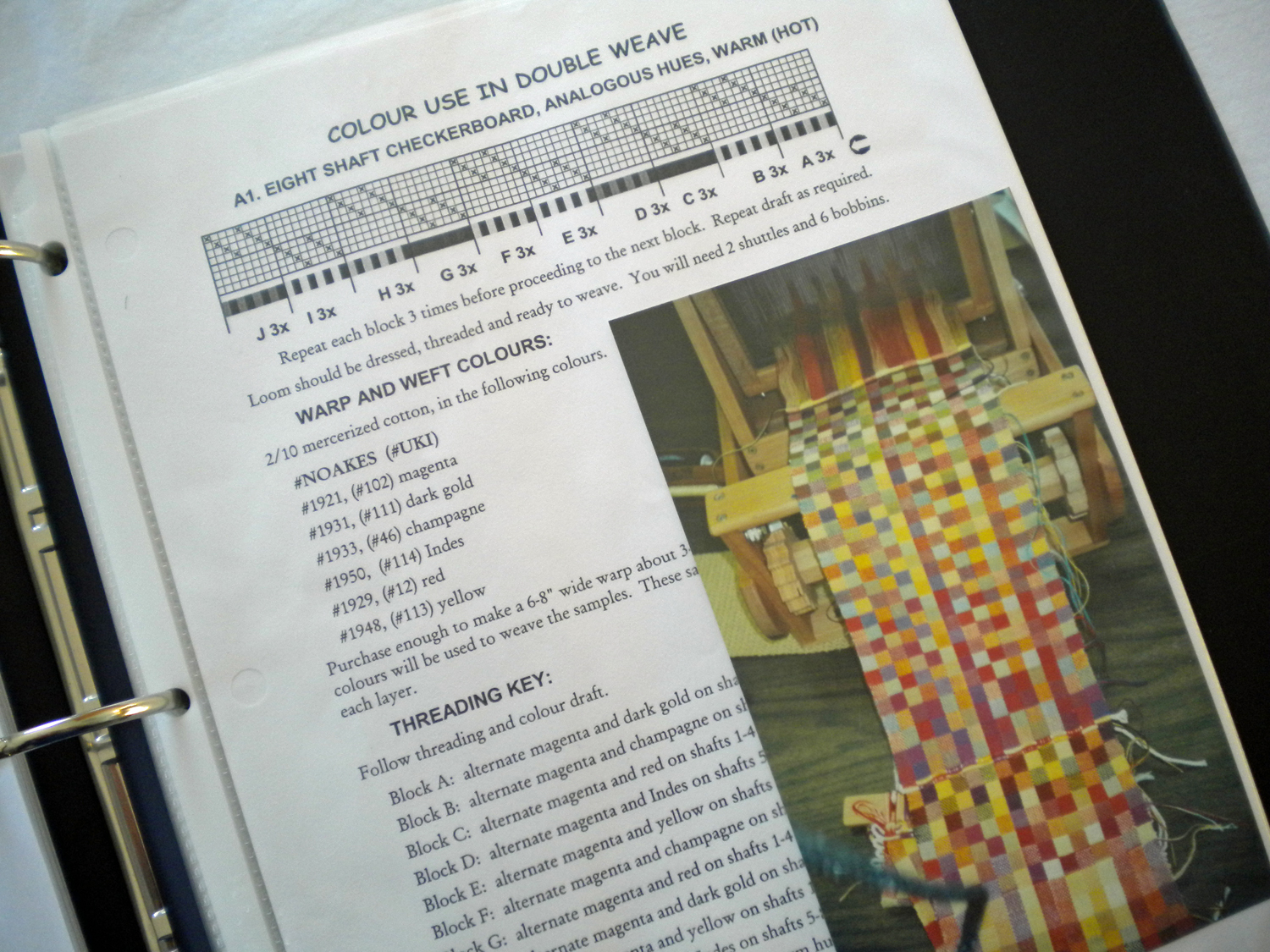
A page from a 2002 double weave workshop

A page from a 2002 double weave workshop

I’ve also attended numerous workshops over the years, one of which was entirely on double weave. Ingrid Boesel visited our guild in 2002 to teach about color in double weave. My binder included photos of our round-robin projects along with the drafts. It’s fascinating to see how different colors affect the look of a fabric.

Looking through these articles and studies was just the jump start I needed. A warp of dark blue and medium blues went on my small loom to refresh my memory. I sampled a selection of weft colors, settled on one, and took off.

Double weave sample (lower right) and resulting runner

Double weave sample (lower right) and resulting runner

Overall I’m pleased with the result and am already winding a follow-up warp with improvements. My “light” side doesn’t have to be stripes to match block arrangements; I’m blending the light colors to see how that looks. I’m also going to sett the warp closer (48 epi for 10/2 mercerized cotton vs. 40 epi as in the first warp). And I do have to be careful about weft skips on the underside, but because this is plain weave, the repairs are not difficult. And then there’s the question of whether or not to join at the edges. I chose to join on this runner, but it puckers a little because of that, meaning one layer pulled in more. I’ll have to leave the edges open next time. An ounce of prevention…

Once I get warmed up, my plan is to expand to the draw loom. With my 20 pattern shafts, I think I can weave five pattern blocks of double weave compared to just two blocks on my 8-shaft loom. An exploration of block arrangement and manipulation is in the wings!

The Finish Line

16 Tuesday Dec 2014

Posted by jeanweaves in creating, Weaving Inspiration

≈ 3 Comments

Tags

creative inspiration, Finish Line, Holidays, Production, Weaving

I’ve noticed a trend in how winter unfolds in my studio. Through the course of the summer and fall, one warp after another dresses each loom and the hemming basket always has something in it. There’s always another project in the planning stages. November stands out on the calendar as a finish line of sorts; items have to be finished by then to be ready for holiday sales.

Kitchen Towel in Cotton and Linen

Kitchen Towel in Cotton and Linen

In the past, when I had an outside job, any items I wanted to put in our guild’s holiday sale had to be made over summer when I had shortened hours. If they weren’t finished by September, they weren’t going to be in the show. Now that I’m just in the studio, I can weave into October for that event, but I also have other venues to cover. Stocking up is the order of the season. I have to have enough inventory finished to get through the holidays.

However, by the third week of November, the pace changes.  The finish line approaches. The towels are hemmed. The scarves are fringed. The runners and napkins are pressed. And I have to admit that the unfinished items – and there are always some of those! – will have to wait patiently for another week. It’s at this point that my mind shifts to home and hearth.

Working at home gives the impression to most people that the line is blurred between home life and studio life, and to a certain degree that’s true. But in order to keep growing as a weaver, I have to discipline my time. My studio is “the office.” I go to the studio in the morning and work until lunch. I return in the afternoons and continue with whatever I was working on in the morning. With the occasional “let the dog in, let the dog out, let the dog in…”

By December, while I do spend time in the studio, I’m also making cookies, creating gifts, and planning menus. As I write, soup is simmering on the stove and bread is rising. In another week, grandkids will be running down the halls and pulling out the old toys.

I’m already pondering what will go on the looms in the coming year, what weave structure I want to learn more about, what market trends are emerging. Winter is a good time for reviewing the past year and looking forward to the next. More on that next time. For now, the holidays are just around the corner and there are things to be finished.

May your holidays be filled with grace, peace, and good times!

An Uplifting Weekend

10 Monday Nov 2014

Posted by jeanweaves in Weaving Inspiration

≈ 2 Comments

Tags

Columbia Weavers & Spinners Guild, creative inspiration, Fiber Arts, Handweaving, Towels

Our  local guild’s Holiday Exhibition and Sale has come and gone. What an inspiring weekend! I am always awed by the variety and quality of artwork that all the members share.

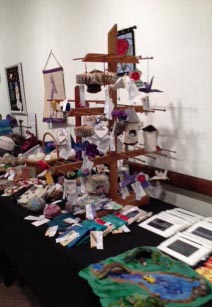
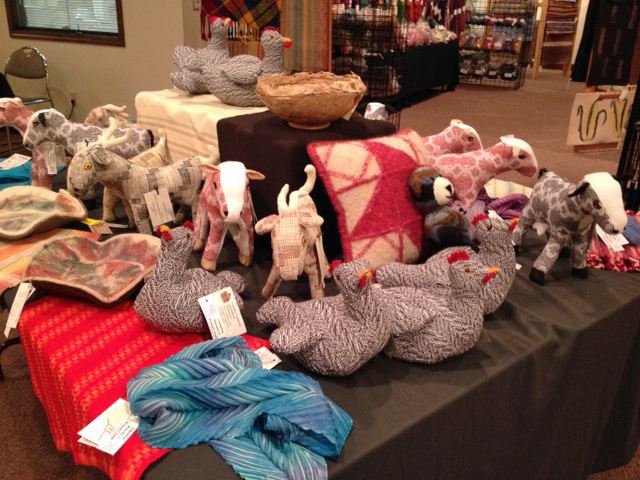
Ornaments, Cards, and Felted Playset at the 2014 HES

Ornaments, Cards, and Felted Playset at the 2014 HES

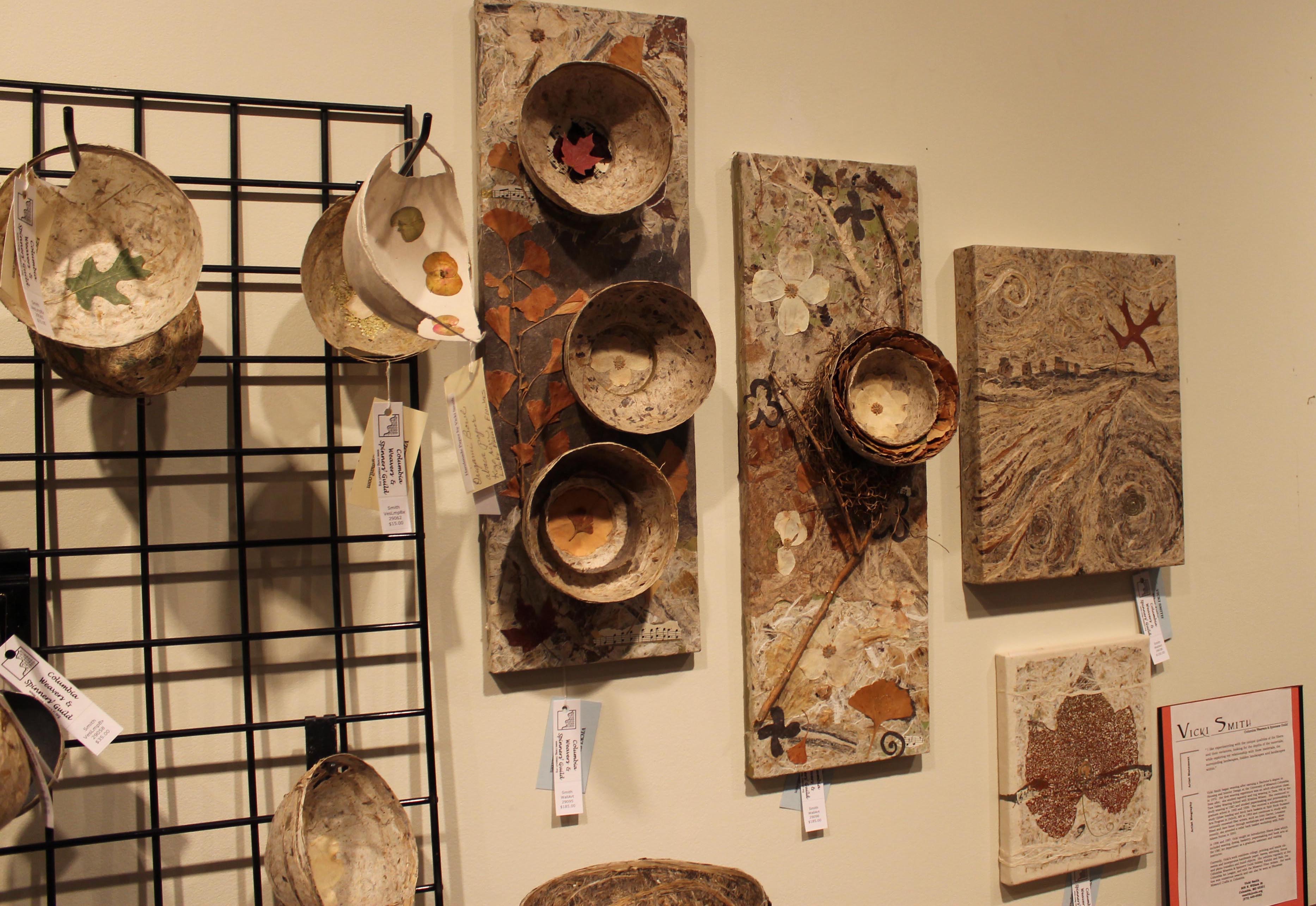
We had a lot more wall art this year, felted pieces as well as hand-made paper. One of our members needle-felted playsets for small hands — adorable landscapes for ducks, hedgehogs, and turtles. Another member repurposed linen clothing into scarves dyed with rust (yes!) and embellished with stitching; so creative!

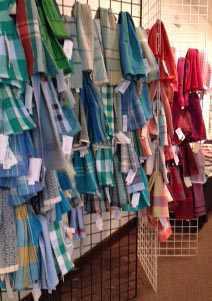
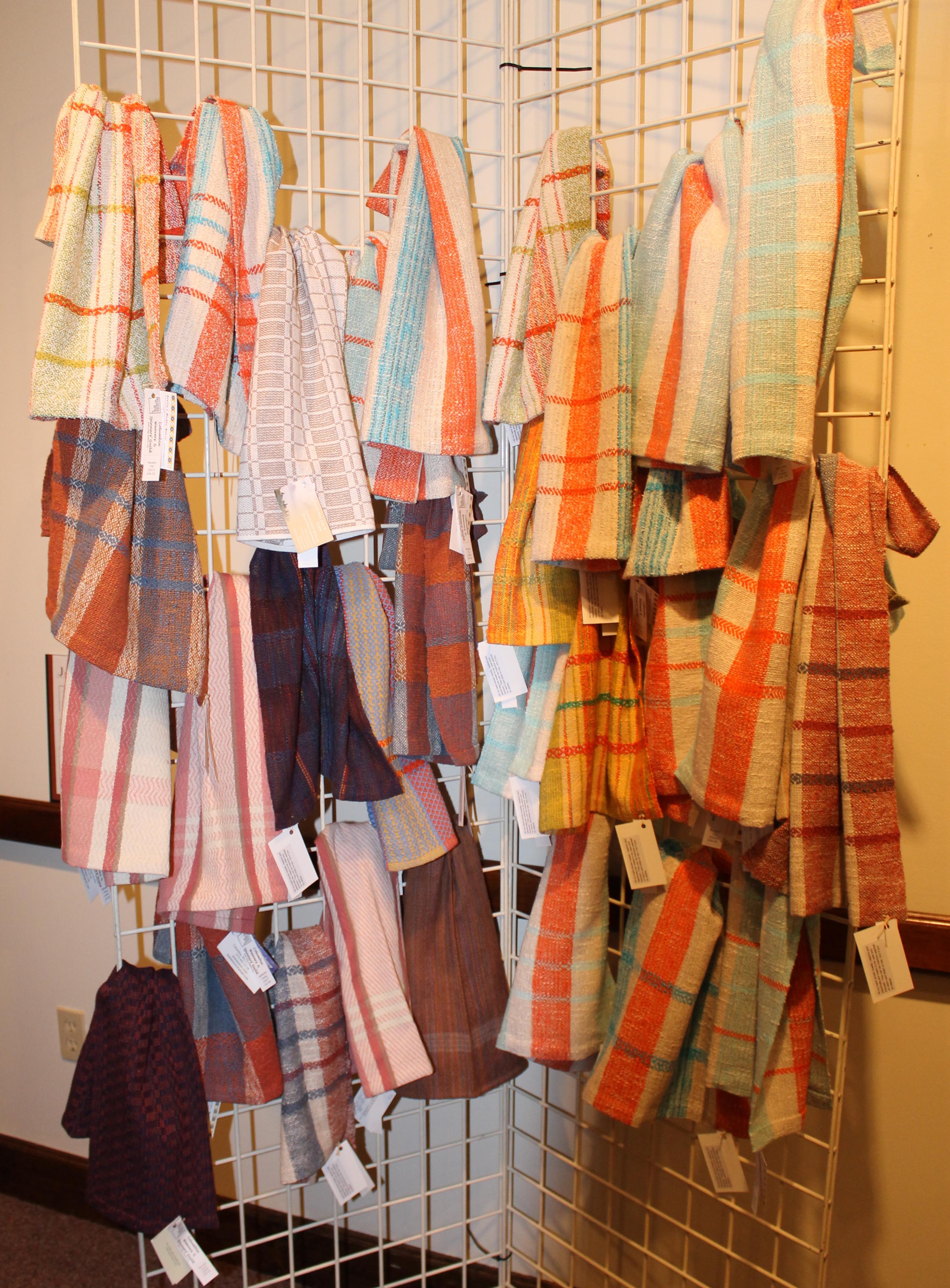
And of course, we had a colorful collections of towels that seemed to fly out the door. I selected an exquisite Scandinavian-style linen towel to come home with me. Yes, we some of our own best customers!

Towel Display at the 2014 HES

Towel Display at the 2014 HES


I am also humbled, knowing that a guild like this is something to be treasured. Not everyone has this kind of support and inspiration, not to be taken for granted. I wish all weavers were surrounded by an inspiring, encouraging fiber family, if not locally, than at least over the net.

May your fiber connections bring you inspiration as the fall quiets into winter. Stay warm!

This is it!

06 Thursday Nov 2014

Posted by jeanweaves in Uncategorized, Weaving Inspiration

≈ 1 Comment

Tags

Columbia Weavers & Spinners Guild, creative inspiration, Fiber Arts, Handweaving

Columbia Weavers and Spinners Guild Holiday Exhibition and Sale 2014

After months of threading, weaving, hemming, meeting, and planning, this is it — our local guild’s annual Holiday Exhibition and Sale is here!

We’ve been doing this exhibition for 25 years now. Out of a guild averaging 100 members, 20-25 usually submit items to show and sell. Many other members have demonstrated, greeted, answered questions, and generally hung out at the museum for the weekend. We enjoy each other’s company!

Photo by Rebecca Bergfield

Photo by Rebecca Bergfield

And this is one of the ways we reach out to our community to show them what we do and how we do it.  Many people have only a vague idea of what weaving, spinning, felting, or paper-making involve. This is our chance to show them. It’s a lot of work, but also a lot of fun.

There’s everything from handwovens (of course!) to alpaca fiber, ornaments to jewelry, baskets to handmade paper. If you are in the Columbia, Missouri area this weekend, stop by to see what we have. Details are at http://www.cwsg.missouri.org/holidaysale  We’d love to meet you!

A small selection of handwoven towels. Photo by Rebecca Bergfield

A small selection of handwoven towels. Photo by Rebecca Bergfield


Handmade Paper Art. Photo by Rebecca Bergfield

Handmade Paper Art. Photo by Rebecca Bergfield


Looking Ahead

19 Tuesday Aug 2014

Posted by jeanweaves in Weaving Inspiration

≈ Leave a comment

Tags

creative inspiration, CWSG, Fiber Arts, Spinning, Weaving

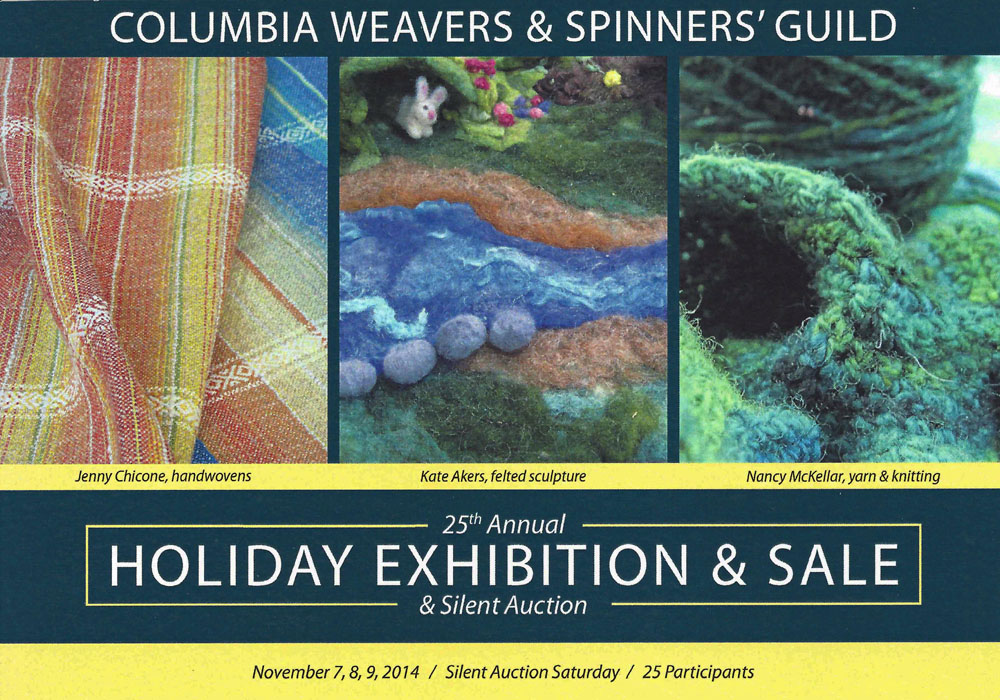
The Columbia Weavers and Spinners Guild is presenting its 25th Annual Holiday Exhibition and Sale this November. When we started in 1990, our goal was to build community, to education the public about fiber, and to learn better marketing skills.

Columbia Weavers and Spinners Guild Holiday Exhibition and Sale 2014

Columbia Weavers and Spinners Guild Holiday Exhibition and Sale 2014

Many members have participated in the HES as the guild itself has grown, and we have definitely built lasting friendships as we have worked together on this event. It takes a lot of planning and many hands to publicize the exhibition, make an inviting display, and demonstrate throughout a weekend. We plumb all our other skills, from record keeping, writing, marketing, and teaching, to pull it all together. (Many participants have “day jobs” in addition to being fiber artists.)

Over the years, we’ve had Girl Scouts, 4-H club members, college students, football fans, people of all ages and interests, come see the demonstrations of weaving, spinning, twining, felting, and knitting. One loom is warped for anyone to try.  It’s fun to watch people tentatively throw a shuttle for the first time and figure out how the cloth is formed.

And we continue to learn ourselves. How do we present our handwovens? What color is featured in the mass market each year? What is the best way to finish the fiber so the customer can more clearly see what it is? What makes a good display?

One of my favorite parts of the Holiday Exhibition and Sale is seeing what everyone else is making. There is so much talent out there, so much creativity, that it fires the imagination! Just look at what can be done!

So if you happen to be in Columbia, Missouri November 7, 8 or 9, stop by the Boone County Historical Society Museum and be inspired!

Inspiration on the Trail

30 Wednesday Jul 2014

Posted by jeanweaves in Weaving Inspiration

≈ 2 Comments

Tags

creative inspiration, Weaving

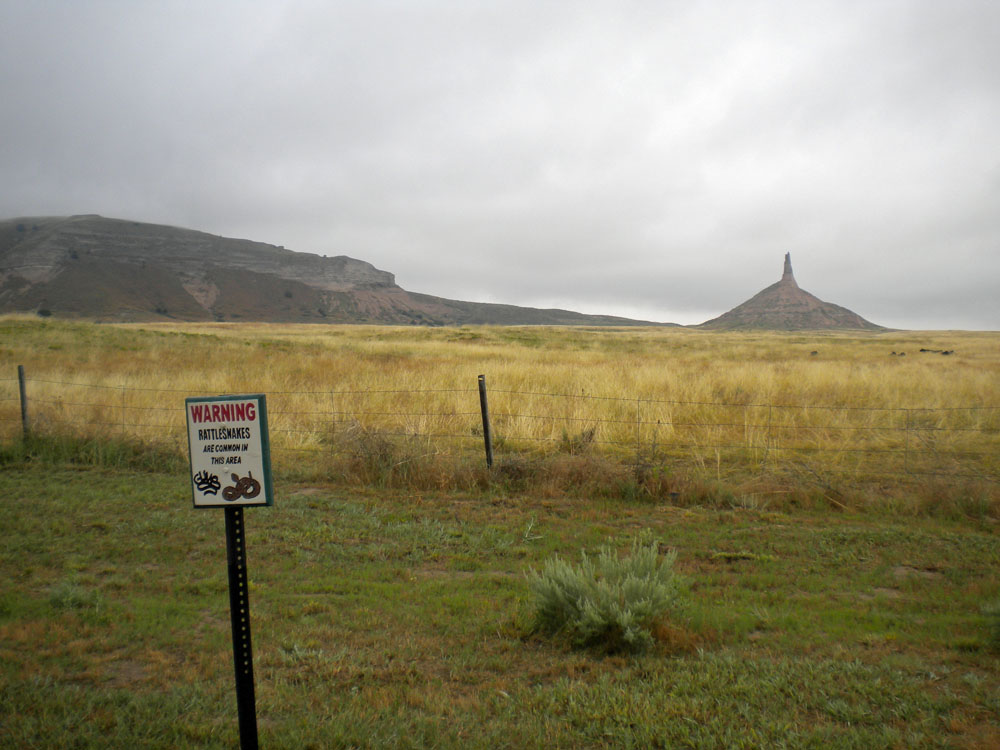
Chimney Rock in Nebraska

Chimney Rock in Nebraska

Like many, we’ve been on the road over the past couple weeks. It wasn’t a planned vacation per se–we were helping someone move across country and along the way, there was some wonderful scenery.

Our path followed the old Oregon Trail from Missouri through Nebraska and on into Wyoming. We reached Chimney Rock about the time we needed to stretch and spent a pleasant half hour in the Visitor Center. (Note the sign in the foreground–needless to say, we stuck to the sidewalks!)

Popo Agie River in Wyoming

Popo Agie River in Wyoming

The transition from plains to semi-arid scrub to mountain impressed us “flat-landers” as my husband called us. I thought often of how the American Indians and the settlers viewed the land they lived in and passed through. We had the luxury of an air-conditioned vehicle and could travel from state to state within two days. It took them many hot, long days by foot, horseback, or wagon.

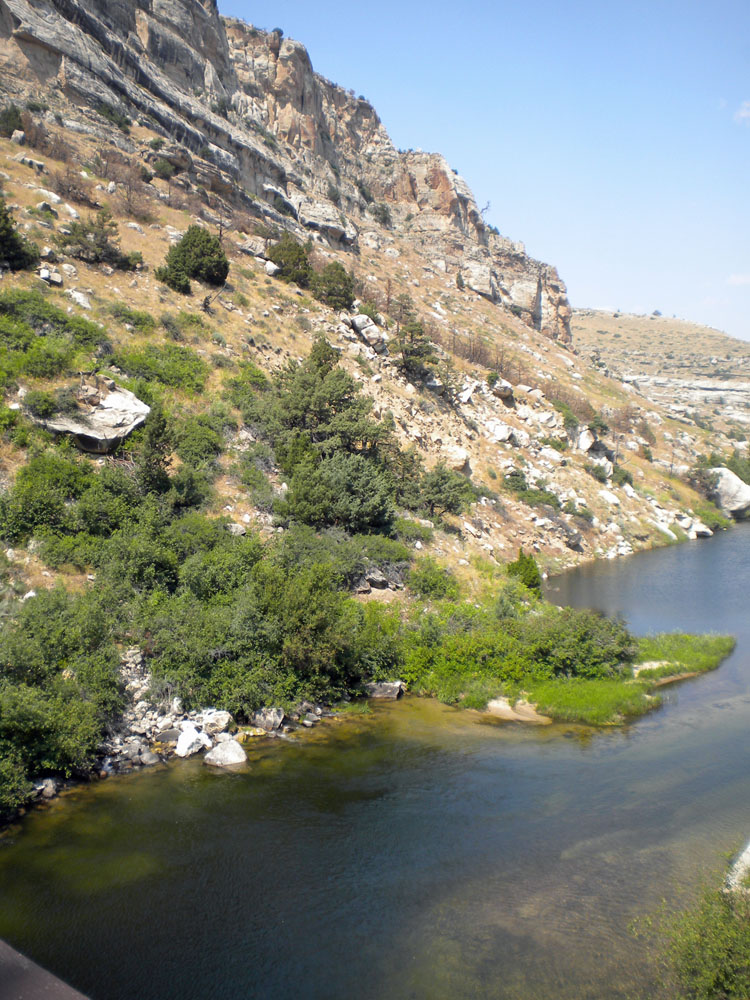
We stood in awe at the foot of bluffs and mountain streams. I could have sat for hours soaking in the rock formations, the colors, the sounds. The Sinks State Park in Wyoming is worth the visit. The Popo Agie River “sinks” below the surface for 1/4 mile before “rising” back up and along its way to the Wind River. It was a lovely outing close to where we were staying and a hint of the grandeur further on down the road. We didn’t get to Yellowstone or the Grand Tetons on this trip but we’ll go back many times, I’m sure.

Sinks State Park in Wyoming

Sinks State Park in Wyoming

Now that I’m home, I’m pondering how to translate all of that beauty into fiber. I’m not a tapestry weaver but nature still influences what I weave. The play of color across the cliff face, the expanse of sagebrush, the shape of rock formations, all of these will echo in my mind as I plan new projects. Hopefully I can share something of the area’s beauty through weaving.

← Older posts
Newer posts →
Shop!

Follow Us

  • Facebook

Galleries

  • Towels to Use and to Give
  • Runners
  • Scarves for Him and Her
  • For the Table
  • Note Cards
  • Animals
  • Throws
  • The Linen Press
  • Privacy Policy

Subscribe

  • RSS - Posts
  • RSS - Comments

Archives

  • September 2020 (2)
  • October 2019 (1)
  • August 2019 (1)
  • July 2019 (2)
  • June 2019 (2)
  • March 2019 (1)
  • November 2018 (2)
  • September 2018 (1)
  • July 2018 (2)
  • May 2018 (2)
  • April 2018 (1)
  • February 2018 (2)
  • January 2018 (1)
  • December 2017 (1)
  • November 2017 (2)
  • October 2017 (3)
  • August 2017 (1)
  • July 2017 (1)
  • June 2017 (2)
  • May 2017 (2)
  • March 2017 (2)
  • February 2017 (2)
  • January 2017 (2)
  • December 2016 (1)
  • November 2016 (1)
  • October 2016 (2)
  • August 2016 (3)
  • June 2016 (1)
  • May 2016 (1)
  • March 2016 (2)
  • February 2016 (1)
  • January 2016 (1)
  • December 2015 (1)
  • November 2015 (3)
  • October 2015 (1)
  • September 2015 (4)
  • August 2015 (1)
  • July 2015 (2)
  • June 2015 (1)
  • May 2015 (1)
  • April 2015 (2)
  • March 2015 (2)
  • February 2015 (2)
  • January 2015 (2)
  • December 2014 (1)
  • November 2014 (3)
  • October 2014 (1)
  • September 2014 (2)
  • August 2014 (1)
  • July 2014 (3)
  • June 2014 (1)
  • May 2014 (2)
  • April 2014 (2)
  • March 2014 (2)
  • February 2014 (2)
  • January 2014 (2)
  • December 2013 (2)
  • November 2013 (1)
  • October 2013 (1)
  • September 2013 (3)
  • August 2013 (1)

Blog at WordPress.com.

Privacy & Cookies: This site uses cookies. By continuing to use this website, you agree to their use.
To find out more, including how to control cookies, see here: Cookie Policy
  • Subscribe Subscribed
    • jeanweaves
    • Join 62 other subscribers
    • Already have a WordPress.com account? Log in now.
    • jeanweaves
    • Subscribe Subscribed
    • Sign up
    • Log in
    • Report this content
    • View site in Reader
    • Manage subscriptions
    • Collapse this bar
 

Loading Comments...